
European migration policy: towards greater irregularity
As the new European Pact on Migration and Asylum nears its implementation, Europe seems to be increasingly obsessed with deterrence measures. However, the decisions to harden laws and shift processing to external borders, gives rise to the pressing concern of creating a permanent 'parallel society' of people without rights. An administrative limbo that threatens social cohesion while failing to address the hurdles of displacement.
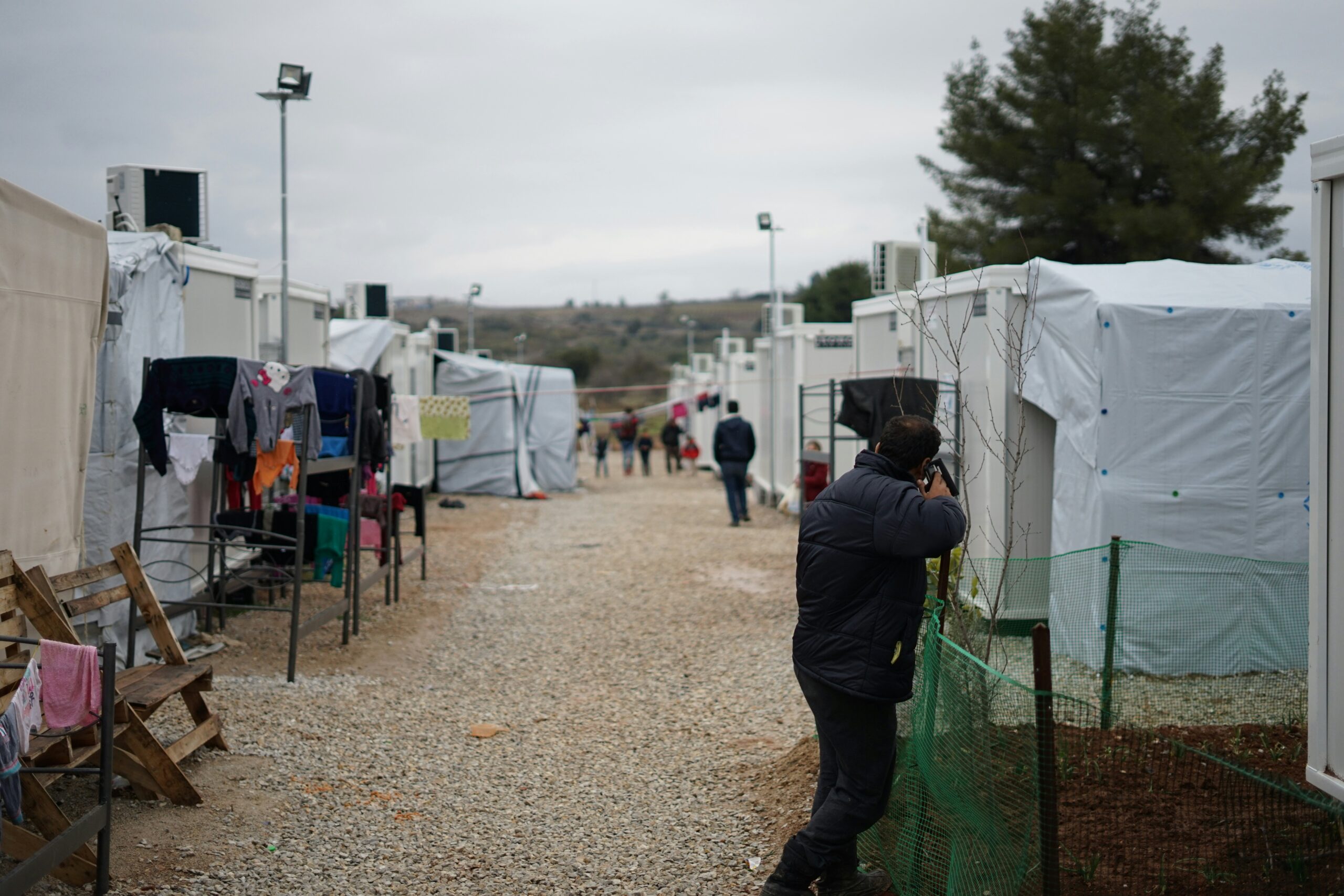
© Unsplash / Julie Ricard
The new European Pact on Migration and Asylum, adopted by the Council of the European Union in May 2024, is due to enter into force on 12 June. This package of nine regulations and one directive constitutes an extremely dense and complex body of legislation. It provides for the submission and processing of asylum applications at the borders of the European Union. By doing so, the Pact further links asylum and irregular migration, casting suspicion on asylum seekers as people who are abusing this protection. At the same time, 2026 saw the launch of discussions on the revision of the Return Directive, a text adopted in 2008. The new version provides, in particular, for the construction of “return platforms” – detention centers outside European borders – where people awaiting deportation would be held. These texts reflect a European obsession with combating irregular immigration. But they also reflect an unprecedented hardening of the law.
From where does this framing originate from, and what are its consequences? Or to put it another way, how can we already predict that the stated objectives will not be met, and that this failure will have a negative impact not only on the rights of migrants, but also on European societies by creating a group of people with few or no rights, which will have a negative effect on social cohesion and equality?
In EU countries, the 2015 crisis remains a defining moment sparking panic among governments, due to the increased numbers of migrants arriving on European soil and in particular, the surge in asylum applications compared to previous years.
The number of migrants arriving in Europe has increased at a much lower rate than in other regions of the world, despite a peak in 2015. As François Héran, a demographer and professor at the Collège de France, points out, migration is a normal phenomenon in contemporary societies. This is obvious in Europe, with an increase of 83% between 1990 and 2024, but to a lesser extent than in the rest of the world, where the increase was 98 %. According to the UN, people seeking refuge account for only one-sixth of migrants, although in 2024 this is the highest proportion since records began in the 1950s. This figure covers all migration, including via legal channels. What about so-called irregular migration?
Media hype and unreliable sources
In the European public debate on the subject, politicians and a number of media outlets cite figures produced by Frontex, the European Border and Coast Guard Agency. The agency noted that in 2025, the number of irregular migrant crossings at Europe’s borders fell by 26% compared with 2024, reaching its lowest level since 2021, at an estimated 178,000. However, these figures are both over- and underestimated.
They are overestimated because the same person may cross an external border several times and be counted multiple times. They are underestimated because irregularity is not only the result of an illegal border crossing, but also of a stay that extends beyond the permitted time. As highlighted in a European Parliament note, these figures therefore primarily measure the agency’s activity, rather than border crossings.
Moreover, the sources do not align: the Eurodac database of border-recorded fingerprints does not correspond with Frontex’s data, which is hardly surprising.
Furthermore, although the term ‘irregular’ is often associated with crossing borders in public debate, the reality is different. It is possible to cross a border without documents and subsequently obtain legal status, as is the case for people seeking asylum. In an article entitled “Borders start with numbers: How migration data create ‘fake illegals’”, researchers show that in 2015, 75% of people who had crossed European borders illegally were likely to be granted refugee status. This figure averaged at 55% between 2009 and 2021. Conversely, many people find themselves in an irregular situation despite having crossed European borders legally.
European sources are no more reliable regarding irregular stays than they are regarding irregular entries. The data on irregular stays available in Eurostat suffer from numerous methodological limitations, as highlighted by the various researchers we interviewed when attempting to compile a database. For instance, an asylum seeker might be recorded in Eurostat as both someone in an irregular situation and as an asylum seeker awaiting a decision. Another Eurostat source is data on returns and expulsion orders, which are supposed to help measure irregular residence. Under the Return Directive, expulsions concern foreign nationals returned to third countries. However, Eurostat also includes returns to other European countries (European Union or European Economic Area countries, such as Norway). Reducing the figure for returns to third countries to the total number of returns, including those to European countries, makes the ineffectiveness of returns – an issue that is, once again, very much present in public debate – appear greater than it is.
An obsession, shared rules, but no common policy
The link between irregular migration and the crossing of European borders is deeply rooted in the very history of European integration. In a series of briefings, the European research group on irregular migration MIrreM (Measuring Irregular Migration) examines the history of this aspect of European policy.
The European Commission first raised the issue in the 1970s. However, it was not until the 1990s that irregular migration became a matter of Community concern. Following the signing of the Treaty of Amsterdam in 1997, the European Union set itself the goal of becoming ‘an area of freedom, security and justice’, adopting a two-pronged approach of securing its external borders while facilitating the free movement of its own citizens.
At the 1999, the Tampere European Council, four pillars of a common asylum and immigration policy were identified: cooperation with countries of origin, the establishment of a common European asylum system, the fair treatment of foreigners, and the management of migration flows. It drew a link between irregular migration and organised crime and called for trafficking and people-smuggling to be criminalised. The Council also advocated the externalisation of external border control. The inclusion of this policy area on the political agenda also gave rise to a set of legal and administrative instruments.
Overall, there are therefore common rules on asylum in Europe: the Dublin system, soon to be marginally amended by the new Pact on Asylum and Migration, stipulates that the country of first entry is responsible for processing asylum applications. Under this system, asylum seekers may be transferred from one European country to another, even if it is not the country in which they wish to seek protection. Other rules establish a common framework while allowing countries some discretion. For example, the duration of administrative detention may not exceed 18 months.
As for the rest, countries have considerable discretion. This is particularly the case when it comes to residence. There is no European system governing residence, nor a common approach to citizenship access. These matters remain under the sovereignty of individual European countries.
Looking across the Atlantic, it is clear that policies can become even tougher, and that, in addition to infringing on human rights, these crackdowns do not produce the intended effects but contribute to creating even more irregularity.
In addition to the raids carried out by ICE, the immigration authorities, there is now talk of stripping children born in the United States to parents with temporary residence permits or in an irregular situation of their citizenship. The effects of such a measure have been calculated by the Migration Policy Institute and the University of Pennsylvania. This would result in around 255,000 children being pushed into an irregular status each year, contributing to an increase of 2.7 million by 2045 and 5.4 million by 2075 in the number of people in an irregular situation. What is the situation in Europe?
The creation of irregular migration
In France, the number of undocumented migrants has increased over the past twenty years. The most reliable estimate is based on the number of recipients of state medical aid for undocumented people (AME), which stands at around 400,000 people in 2024, taking into account the latest research on non-take-up, which dates from 2019 and estimates the non-take-up rate at around 50 per cent, resulting in an estimate of approximately 700,000 to 800,000 people in an irregular situation. In 2003, this figure was 180,000.
Over the years, it has become increasingly difficult to obtain the necessary documents. As early as the late 1990s, where the Pasqua and then Debré laws were adopted, researchers were already talking about the ‘creation of irregularity’. Even residence permits granted ‘as of right’ (as opposed to exceptional permits),do not entitle the holder to regularisation. There are always conditions to be met, which can result in creating ‘neither-nor’ situations where people are neither eligible for regularisation nor subject to deportation. One example is being the spouse of a French national but having entered the country irregularly.
Over the past two decades, the conditions governing the residence of foreign nationals in France have become stricter in a number of ways. The most recent development is the Darmanin Act, which came into effect in January 2024. The expected level of knowledge regarding French culture, language and republican values has increased. While the law claims to promote integration, it has in fact reinforced “the constraints that may ultimately act as factors of exclusion”, points out researcher Jules Lepoutre in an article. There is even a risk that foreigners with legal residence “may lose this status in the short or medium term as a result of the new law”, notes the legal expert. The level of language proficiency required for a multi-year residence permit and a 10-year residence permit has increased. The same applies to obtaining citizenship. Furthermore, it will no longer be possible to renew a one-year temporary residence permit more than three times on the same grounds. Applicants will either have to change their grounds or obtain a multi-year permit or a residence permit. Otherwise, they will find themselves in an irregular situation.
Another avenue is exceptional regularisation schemes, which primarily concern the regularisation of undocumented migrants in employment. An initial circular, signed by Manuel Valls, was adopted in 2012, setting out the conditions to be met. As a result, around 30,000 people were regularised in this way each year in France. However, in 2024, the Immigration Act and the subsequent Retailleau circular, named after the new Home Secretary, tightened the conditions for such regularisations. For instance, the required length of residence in the country increased from three to five years, to seven years. As a result, there was a 42% drop in regularisations during the first nine months of 2025. The drop was as high as 54% for work-related cases.
A third possible route: large-scale exceptional regularisation operations, such as the one due to take place in Spain. In 1981, 130,000 people were thus regularized, and 80,000 in 1997. Since then, regularisations have been carried out on a case-by-case basis.
Finally, seeking asylum is also a way of obtaining a residence permit, which is valid for between one and ten years, depending on whether one is granted subsidiary protection or refugee status. In France, the rate of positive decisions at first instance was 41% in 2025, and 23% on appeal. These figures may seem high. However, given the increase in the number of asylum applications (+60% compared to 2015, although this trend is not linear), the number of people whose asylum claims were rejected has also risen in absolute terms. In 2024, 85,000 people were refused asylum at first instance, compared to 57,000 in 2015. On appeal, this figure was 47,000 in 2024 compared to 29,000 in 2015. However, a person whose asylum application has been rejected may subsequently be granted legal status on other grounds, or be deported. But they may also remain in the country without papers, which is quite common.
The figures also show that France issues the most deportation orders of any European country. However, due to legal, administrative or diplomatic reasons (e.g. the person cannot be deported due to their state of health or family ties; it is not possible to identify the country of origin due to a lack of identity documents; or diplomatic reasons (the countries of origin or return do not give their consent), the enforcement rate is low. This is a mechanical process, as simply issuing fewer deportation orders is enough to improve the ratio. In the meantime, this means that people are living in the country illegally.

Finally, administrative practices themselves also create irregularity. The shift towards digital processing and the requirement to use the national ANEF platform (Digital Administration for Foreign Nationals in France) for a large number of residence permits since 2020 has placed many people, including those who previously held a permit but have since lost it, into an irregular situation. According to the Defender of Rights (Défenseure des droits), cases relating to immigration law accounted for 41% of all cases in 2025, representing a rise of more than 750% since 2019. Three-quarters of these cases concern access to this platform itself, which is the only way to apply for or renew a residence permit.
“Due to excessive delays and malfunctions in the Digital Administration for Foreigners in France (ANEF) platform, thousands of people find themselves in an irregular situation against their will every year, even though they previously held a residence permit. Deprived of a receipt, they lose their jobs, have their social benefits suspended, are forced to interrupt their studies, or are unable to travel, despite having diligently completed all the steps required to comply with current procedures,” the institution’s activity report emphasises once again.
“Digitisation makes the system even more absurd”, agrees Riwanon Quéré, who is responsible for rights of residence at The Cimade. “If people are unable to provide a digital certificate or a receipt confirming their application for a residence permit during an identity check, they may be detained, taken to the police station, or even placed under an OQTF [Obligation de quitter le territoire français]”.
These difficulties fuel trafficking and leave foreigners seeking to obtain or renew their permits at the mercy of intermediaries who charge exorbitant fees for their services. This is true in mainland France but also in Mayotte, where these intermediary shops are known as ‘cybers’.
This phenomenon, involving ‘falling into irregularity’ (English-language research refers to “befallen irregularity”), now affects all social classes in France, and not just migrants with the fewest qualifications. This is illustrated by the recent account of researcher Shreya Parikh, who describes how she also watched helplessly as her residence permit expired, despite having taken the necessary steps in good time.
To put an end to these Kafkaesque situations, Senator Corinne Narassiguin (Socialist) tabled a bill in mid-April aimed at simplifying immigration law, providing in particular for: an extension of the validity period of a number of temporary documents, the merging of various work-related residence permits, an extension from one to two years of the temporary residence permit linked to work or study for foreigners wishing to settle permanently in France, and the automatic renewal of the multi-year permit and the residence permit – a bill already tabled last autumn by her colleague Fatiha Keloua Hachi (Socialist). While the bill is unlikely to be passed, it demonstrates that an alternative approach is possible and that the creation of irregularity is not inevitable.
The situation is not much different in Belgium. The country has adopted a ‘non-reception policy’ that has drawn widespread criticism and condemnation, particularly under the last two governments. The stated aim of this policy is to make the migration process as difficult as possible in order to discourage arrivals.
The Belgian federal government has been condemned on numerous occasions for failing to provide reception facilities for asylum seekers, resulting in penalty payments totalling millions of euros . Anneleen Van Bossuyt, the Minister for Asylum and Immigration and a member of the Flemish conservative party N-VA (New Flemish Alliance), has been criticised on several occasions for her handling of migration issues. She has even been reprimanded by both the Belgian Council of State and the Constitutional Court. The Flemish media outlet Daar Daar recently dubbed her “the minister above the law”.
In Italy, the far-right government distinguishes between labour migration and irregular migration, claiming to support the former to meet the needs of businesses while combating the latter. However, as lawyer Lucia Gennari points out, “people who arrive on work visas (the influx) enter the country legally, but that does not mean they remain in a legal status. There are many administrative hurdles at various levels, and they do not always obtain a residence permit.” Added to this are the numerous legislative changes and widespread application of the accelerated procedure, which reduce safeguards for asylum seekers and make it harder for them to defend their cases properly. As a result, they fail to obtain protection and remain in Italy in an irregular situation. Finally, the lawyer points out that the tightening of the rules on special protection also creates irregularity (see interview).
Spain stands out from its European neighbours, having announced a regularisation scheme set to benefit at least 500,000 people, who will be granted one-year renewable permits, marking the seventh such regularisation since the return to democracy. “The Spanish system is fairly inclusive for those integrated into the labour market,” explains Blanca Garcés, a researcher at CIBOD (Barcelona Centre for International Affairs). “Without the current economic growth, such a regularisation scheme would not be taking place. The pressure from employers is real.” But its economy relies in part on the informal sector, particularly in agriculture and personal care services. “Migrant workers in these sectors have a very, very hard life,” she continues (see interview). Furthermore, Spain has low asylum grant rates. While the collective regularisation taking place is a step in the right direction, it is a corrective measure taken after the event, rather than a proactive and well-managed policy, as researcher Maria Miyar pointed out in Le Monde. This is, in fact, a recurring criticism levelled at regularisation schemes. Spain has also had a permanent residence permit system since the 2000s, known as ‘arraigo’ (rootedness), which can be obtained provided the applicant can prove residence for at least two years and exceptional circumstances (family, work or study-related). In 2024, 224,000 people were granted legal status under this scheme. According to a report by the Jacques Delors Institute, legal labour migration is relatively limited. “The ‘arraigo’ scheme appears to be the main mechanism for regulating immigration.”
Contrary to popular belief, Sweden – historically one of the most welcoming countries in Europe – is significantly tightening its immigration policy. This shift was initiated by the Social Democrats in 2016 and has been accelerated since the coalition government led by Ulf Kristersson came to power, with the support of the far-right Sweden Democrats. Ten years ago, an initial reform restricted the granting of residence permits. If a young person reaches the age of 18 without having obtained permanent residence status, they are no longer considered part of the family unit and lose the right to remain in Sweden on their parents’ visa. In December 2023, a new law made it harder to obtain a humanitarian residence permit by removing the reference to “particularly difficult circumstances” from the Aliens Act. Today, cases of young people who have just come of age, having grown up or even been born in Sweden, being deported are regularly reported in the press and condemned by organisations. On 17 February 2025, a cross-party bill to ban deportations failed to secure a majority in Parliament and was rejected. At the end of March, the government announced that it would press ahead with its controversial bill aimed at encouraging public authorities – including social security and tax authorities – to report individual residing in the country illegally. Furthermore, another bill proposes to increase the number of years required to apply for Swedish citizenship from five to eight.
As a result, the number of asylum seekers has already fallen by 30% in a year, from 9,645 in 2024 to 6,735 in 2025, according to the Infomigrants website: “Asylum-related immigration is even at its lowest level in 40 years.” “If we fail to bring this parallel society under control, it will become firmly established and eventually become permanent,” said Migration Minister Johan Forssell, justifying the unprecedented tightening of measures.
A parallel society is indeed problematic. However, it is the policies pursued that contribute to the creation of such a society. Time and again, irregular status and administrative uncertainty fuel social insecurity, leaving whole sections of the population with fewer social rights and less access to housing and to employment.
There is another reason why changing immigration policy is urgent. According to a study by the Institut National d’Etudes Démographiques (Ined), around 1.5 million foreign nationals arrive in Europe each year, representing 0.3 per cent of a population of 450 million. This net migration figure takes departures into account. Since the continent’s natural population change has been negative since 2012 (there have been more deaths than births), the conclusion is clear: without immigration, Europe is dying out.
This article is published in collaboration with the European Data Journalism Network within the ChatEurope project and is released under a CC BY-SA 4.0 licence.
Original source: https://www.alternatives-economiques.fr/la-politique-migratoire-europeenne-une-fabrique-de-sans-papiers/00118414.
