
Lucia Gennari: “The Italian government mistreats migrants and asylum seekers”
Interview with Lucia Gennari, Italian lawyer specialized in foreigners' rights (The Studio Legale Antartide, Rome)
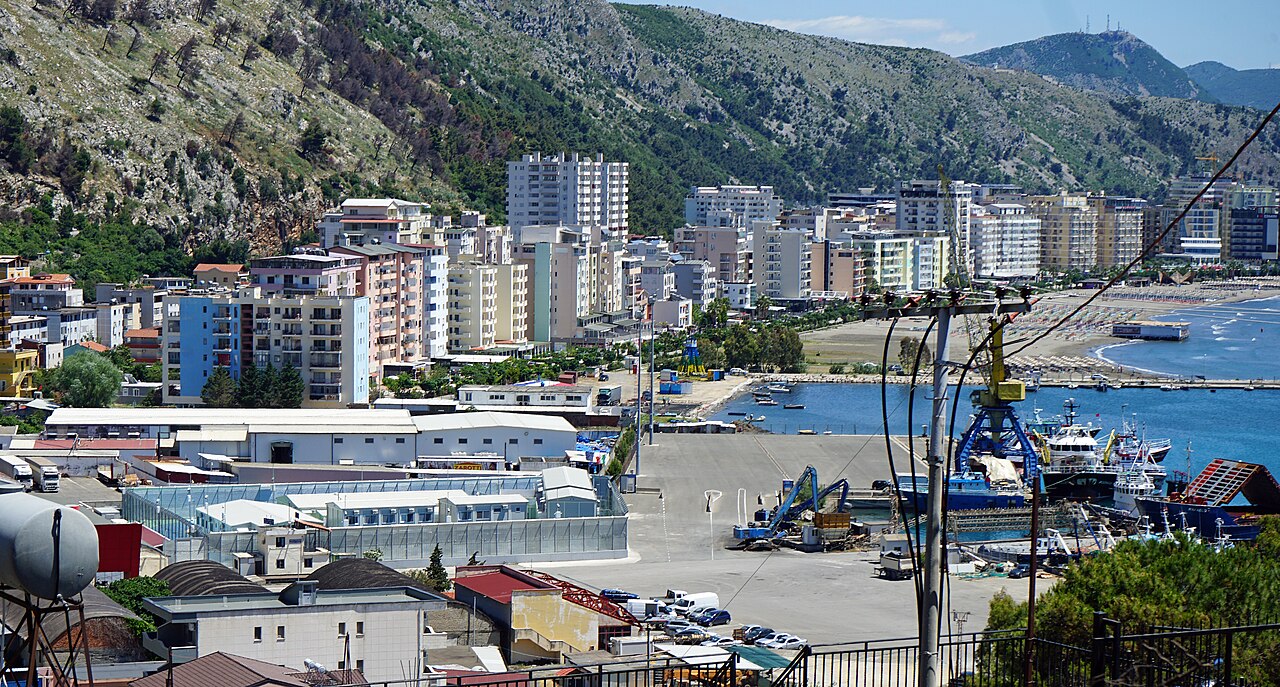
© Albinfo / Wikimedia Commons
AE- Giorgia Meloni’s far right government has led Italy since late 2022. How would you describe its approach to migration since then ?
Lucia Gennari – The government’s rhetoric on migration issues is very harsh, and this is becoming increasingly evident as time goes on. The subject is frequently raised, even when the focus is on another issue. Take, for instance, the constitutional referendum that ultimately saw the Meloni camp lose. In this case, the argument put forward in defense of the judicial reform was that judges are left-wingers who are against the government, as the rulings handed down by these judges are seen as being too favorable to migrants. The same was true of the agreement with Albania, which was blocked by the courts.
This government has consistently reformed migration policy through three major laws, and a fourth one is currently being adopted to bring Italian law into line with the European Pact on Asylum and Migration. Numerous reforms have also been adopted. All of them are aimed at circumventing court rulings, tightening the law, and pushing for the criminalisation of sea rescue NGOs.
However, the government is also seeking to meet the labour needs of Italian businesses, including those requiring foreign workers. In particular, it has adopted a decree setting the number of foreign workers who will be able to come to Italy at nearly 500,000 for the period 2026–2028.This is a substantial figure, but it still won’t meet the employers’ needs.
How does this work quota system work?
In principle, people who are in Italy illegally cannot obtain a work permit. To do so, they must apply for and obtain a visa from their country of origin, whether the work is seasonal or non-seasonal. This then allows them to enter Italy legally, sign an employment contract and obtain a residence permit for a maximum period of two years (for non-seasonal workers). This permit can be renewed as long as the worker is employed.
Every year, the government issues a ‘flussi‘ decree setting quotas for the number of visas to be granted, distinguishing between seasonal and non-seasonal visas, and specifying the sectors concerned, as well as the countries of origin. For high skilled jobs, a system exists that goes beyond the Decreto flussi.
In practice, however, there are cases where undocumented workers are regularised. These ‘amnesty’ laws set out the conditions and timeframe under which undocumented workers can be regularised. The most recent law dates back to 2020; the previous one was enacted in 2012. Therefore, it is quite rare. The 2020 regularisation process was a fiasco. Six years on, some migrants are still in administrative limbo.
You mentioned the numerous legislative changes introduced by the Meloni government. What are the main ones?
In early 2023, the government passed a law tightening the conditions for granting residence permits and imposing sanctions on NGOs involved in sea rescue operations. The ‘special protection’ residence permit, which allows long-term residents unable to obtain a work permit, as well as people in vulnerable situations or with family ties, to receive protection, has had its duration reduced from two years to one. And the possibility to convert a permit for “special protection” into one for work is no longer an option.
Then, in March, just after the Cutro shipwreck, a boat carrying migrants that had set sail from Turkey sank off the coast of Calabria in the night between 25 and 26 February 2023. 94 people died, including 35 children. The Italian authorities were accused of failing to dispatch rescue services despite reports of the boat being in distress having been made. Finally, in 2024, he used the ‘flux decree’ to introduce further changes that criminalised migration.
What are the specific requirements and administrative procedures for obtaining a residence permit and asylum?
Courts have found public administration involved in migration management guilty of mistreatment. Migration offices, competent for receiving asylum requests and releasing or renewing documents, work in a very dysfunctional way. Asylum seekers are forced to stay in a queue even for days in very poor and sometimes dangerous conditions. Administrative procedure can last for years and these situations have been considered illegal by several Italian courts.
Would you say that Italian legislation contributes to irregular migration, given that the prevailing estimate in Italy is that there are 500,000 people living in the country illegally?
Yes, in many respects. Those granted work visas (the ‘flux’) enter the country legally, but this does not guarantee their continued legality of stay. There are many administrative hurdles at various levels, and they do not always obtain a residence permit. It is well known that many migrants, specially from Bangladesh, are victims of frauds within the flussi decree and are not able to get their residence permission. The reduction in safeguards for asylum seekers, coupled with numerous legislative changes and the widespread application of the accelerated procedure, makes it more difficult for people to properly defend their cases. As a result, they are unable to obtain protection and are left in an irregular situation in Italy. Finally, tightening the rules on special protection also creates irregularity.
This article is published in collaboration with the European Data Journalism Network within the ChatEurope project and is released under a CC BY-SA 4.0 licence.
Original source: https://www.alternatives-economiques.fr/lucia-gennari-le-gouvernement-italien-maltraite-migrants-et-demandeurs-d/00118429.
