
The Age of MegaFires
How Europe's biggest wildfires became the new normal
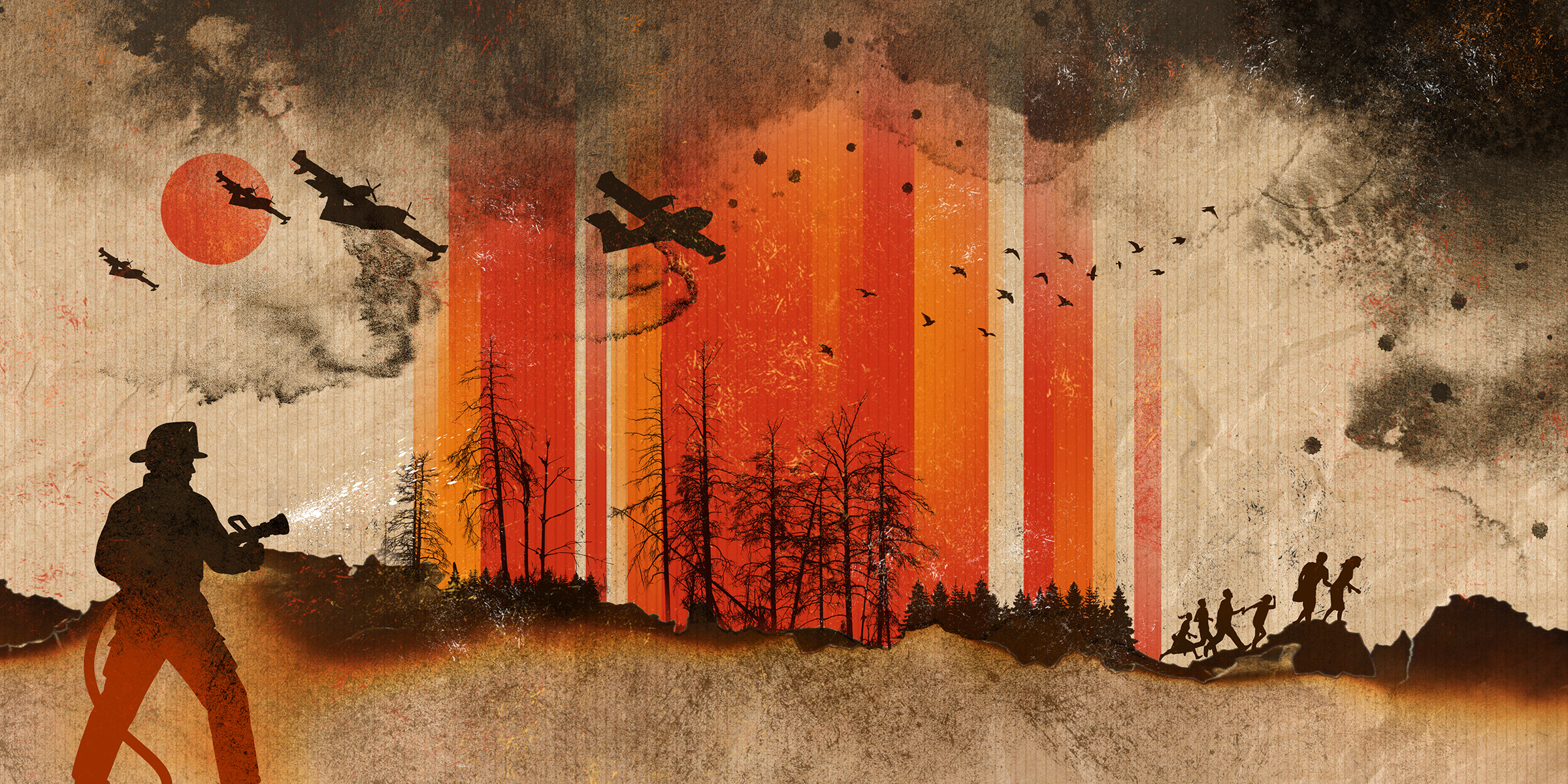
© Louiza Karageorgiou
Five different countries, a fiery now, a dystopian future. In recent days, more than 40,000 people have fled their homes and hotels to escape the inferno at Cap Ferret in south-west France, where more than 10,000 hectares have been reduced to ashes, whilst at least a further 23,000 people have been evacuated from Biscarrosse, a little further south. The government in Spain also issued dramatic appeals for support from the EU, as the country is being ravaged by extremely severe fires west of Madrid and in the provinces of Ávila and Guadalajara. For the past month, the country has been engulfed in flames, with the authorities reporting that over 110,000 hectares have already been burnt in 29 fires in 2026, whilst at least twelve people have lost their lives. Throughout July, Europe has been ablaze. A fire that spread in southern Norway, ‘devoured’ more than a hundred homes and a forested area in the town of Drammen. Meanwhile, 13,500 hectares in southern Portugal were also reduced to ashes by the massive wildfire that broke out in early July in the town of Vouzela, forcing the government to request European reinforcements to help extinguish it. At that same time, two people tragically lost their lives in a fire in Oreokastro in northern Greece, whilst the fire service was once again called to the rescue in areas -Evia, Attiki and Chios- that were recently hit by major wildfires.
Click here to scroll through the interactive new data investigation by MIIR and EDJNet
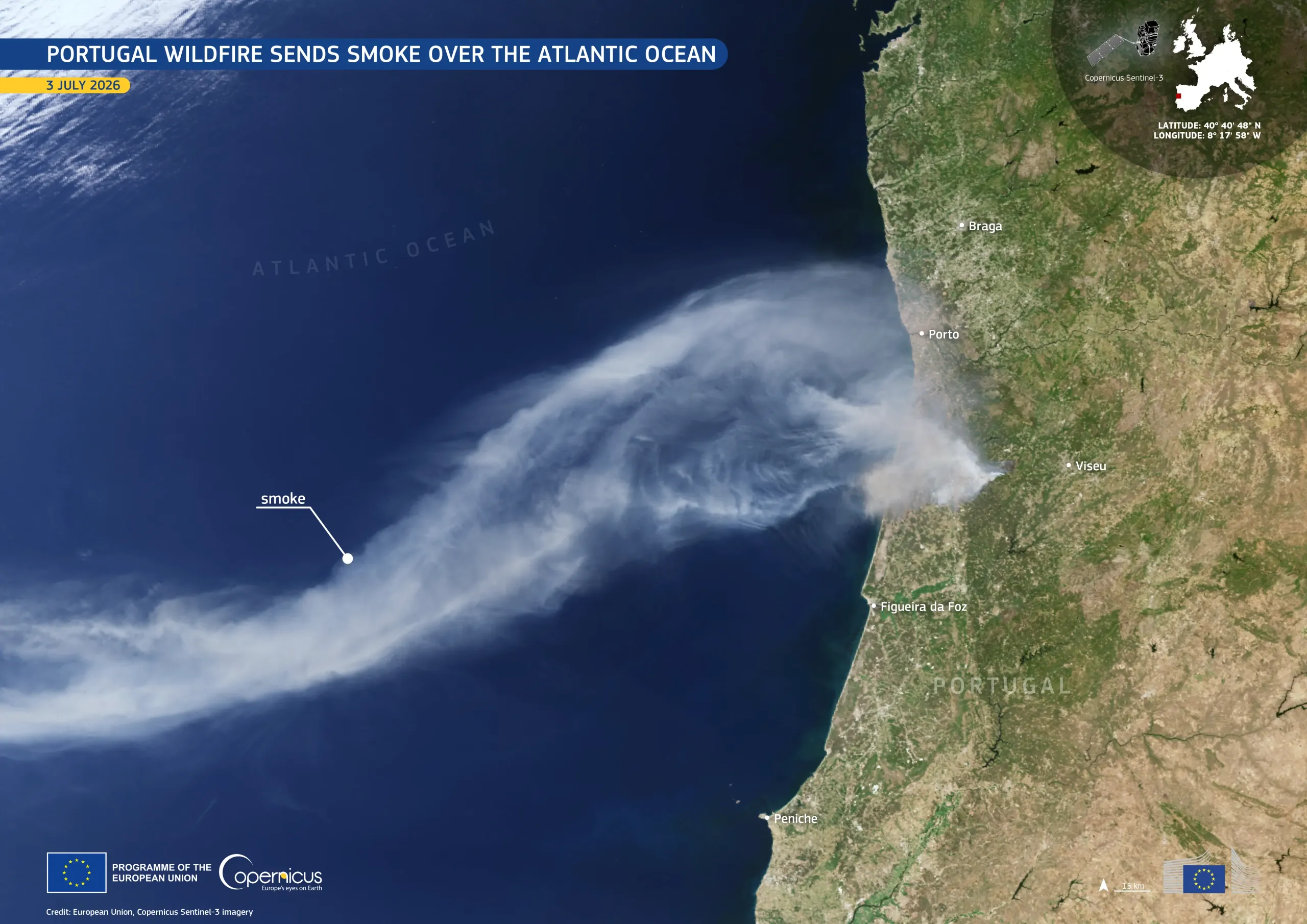
photo1__20260706_Wildfire Portugal
Α smoke plume extending 620km drifting westwards over the Atlantic Ocean, deriving from one of the fires burning near the city of Vouzela, Portugal, on July 3, 2026. – Credit: European Union, Copernicus Sentinel-3 imagery
Through the analysis of data from the European Forest Fire Information System – EFFIS, we have documented the growing impact of fires on the European continent over the last ten years. We analysed nearly 24,000 fires recorded by EFFIS in 26 countries, in a period spanning between April and October (the fire season) from 2015 to 2025, and found that the wildfires left behind at least 4,5 million hectares of burnt land across Europe – an area larger than Estonia.
The estimated area may in fact be even larger, given that the fires detected by EFFIS account for approximately 95% of the total burnt area reported at national level, as smaller fires that do not exceed the satellite detection threshold are not included.
The findings also reveal that large wildfires have become more frequent since 2021, and that they are concentrated in a small number of regions, burn mostly shrubland and transitional woodland, occur mainly in rural areas, and repeatedly affect many of the same protected Natura 2000 sites.

The rise of extreme wildfires
“It was an incredibly large fire that was spreading, and there was no one to stop it. The firefighters who were here made superhuman efforts, but it couldn’t be stopped. The fire was extinguished when it reached the sea. That’s where my business was, where my warehouse burnt down. It’s a miracle that no one died,” says Sotiris Theodorou, a permanent resident and owner of a catering business in Limnia, Volissos, in Chios, Greece.
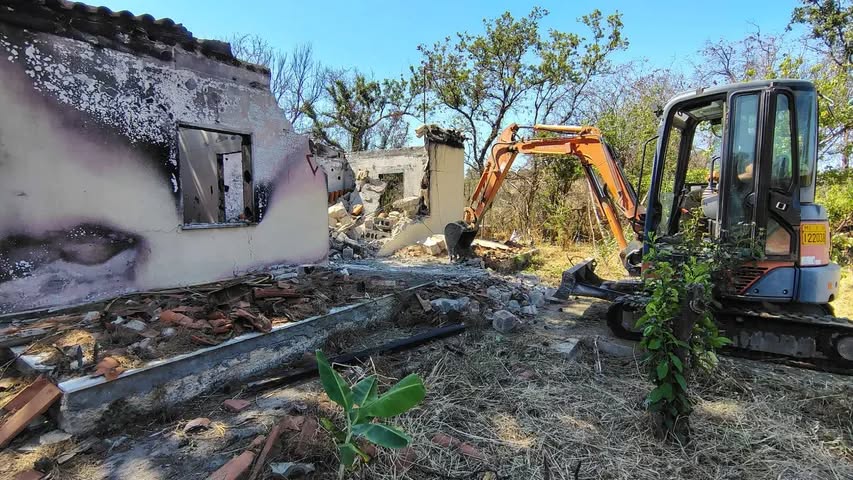
photo2_chios_amani_burnt_house
What is left of one of the many houses that were burnt in the extreme wildfire that started in Amani and burnt more than 7,910 hectares on the island of Chios, Greece in August 2025. – Credit: Sotiris Theodorou
Within five days since the fire started in Amani, Chios last August, around 7,914 hectares of forested area on the island were burnt, the majority of which were Natura 2000 sites, agricultural land, livestock facilities, homes and businesses. What he tells MIIR regarding the Amani fire echoes a phenomenon that Europeans are increasingly dealing with: that of extreme and mega fires.
Between 2015 and 2025, Europe experienced 134 very large extreme forest fires, covering an area of over 5,000 hectares, of which 61 megafires that exceeded 10,000 hectares. These terms refer not only to the size of the area burnt by the fires, but also to the extreme behaviour (high intensity, speed) they exhibit as they spread. According to EFFIS data, megafires have spread uniquely in southern Europe: 25 megafires in Spain, 24 in Portugal, 8 in Greece, 2 in France, 1 in Italy and 1 in Cyprus.
Fires on this scale were rarer until 2020, with the exception of 2017, when Portugal was hit by devastating wildfires – one of the worst years on record for Europe with 26 recorded extreme wildfires. The picture then changed: 13 extreme wildfires in 2021, 22 in 2022, 9 in 2023, 11 in 2024 and 18 in 2025.
The three most devastating megafires of the last five years occurred in the Mediterranean region too: in Evia, Greece where 51,881 hectares were reduced to ashes in 2021, in the province of Zamora, Spain, where over 60,000 hectares burnt in 2022, and in the northern Greece Evros region in 2023, which burnt 96,610 hectares, and remains the largest forest fire ever recorded by EFFIS in Europe.
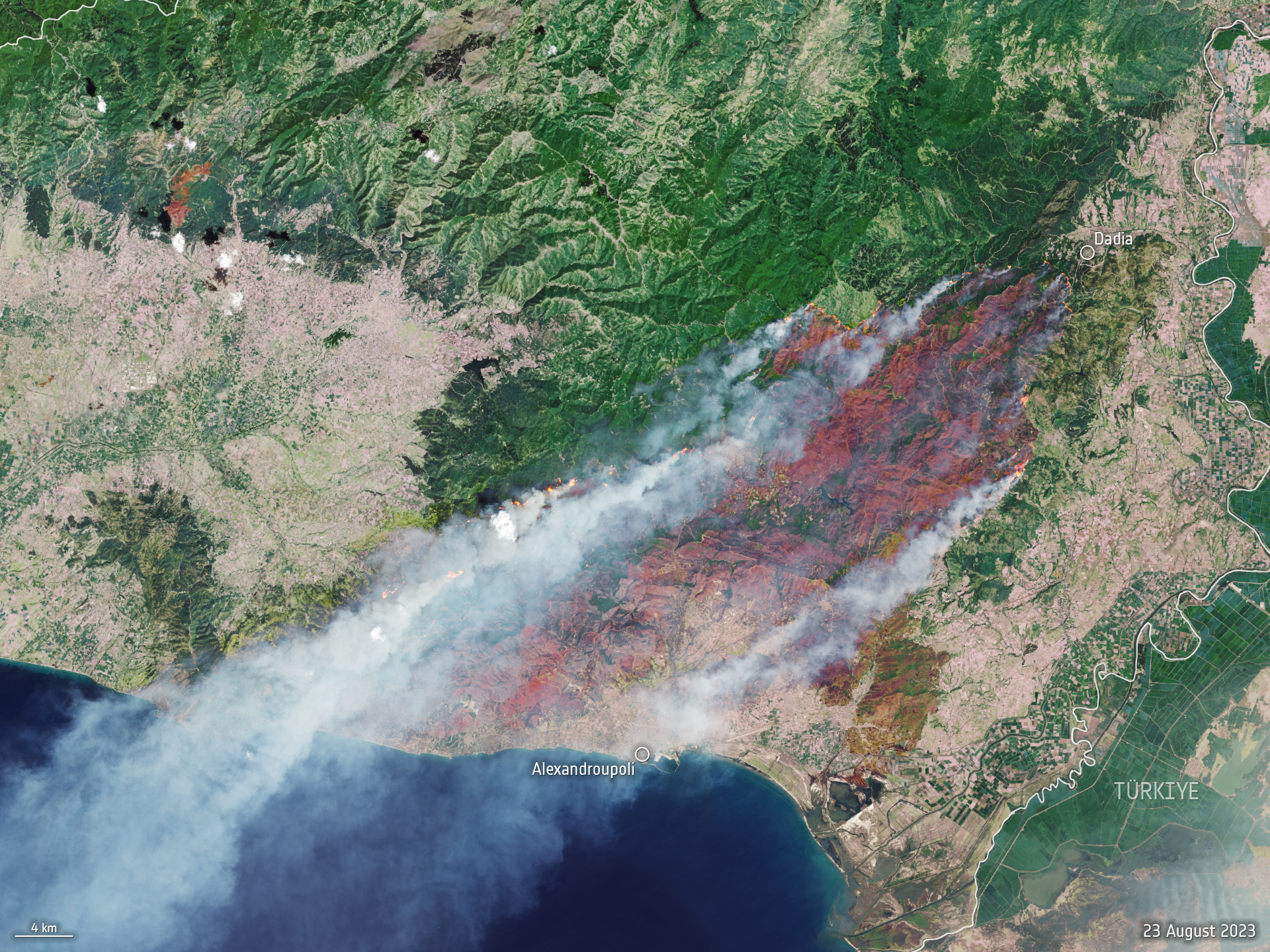
photo3_Dadia_copernicus-ESA_240823
This Copernicus Sentinel-2 image shows the ongoing blaze near Alexandroupoli in the Evros region of northeast Greece on August 24, 2023. – Credit: Copernicus Sentinel data (2023), ESA
Megafires go hand in hand with climate change
The year 2025 was the third warmest year ever recorded in Europe, according to data from Copernicus, exceeding the 1991–2020 average by 1.17°C. Globally, temperatures were just 0.01 °C below the levels of 2023, and 0.13 °C lower than 2024, which remains the warmest year on record. The effects of rising temperatures and extreme weather events are having a significant impact on the progression of wildfires: 2025 was the second most devastating wildfire season in European history, as more than 900,000 hectares of land burned.
Almost 400,000 hectares were scorched last year in Spain alone, as the country faced its worst wildfire season in 30 years. Nearly 89% of all burned land was concentrated in just three regions – Castilla y León, Galicia, and Extremadura – where some of the most rural and depopulated municipalities were affected. Eight people died, whilst more than 42,000 residents fled their homes.
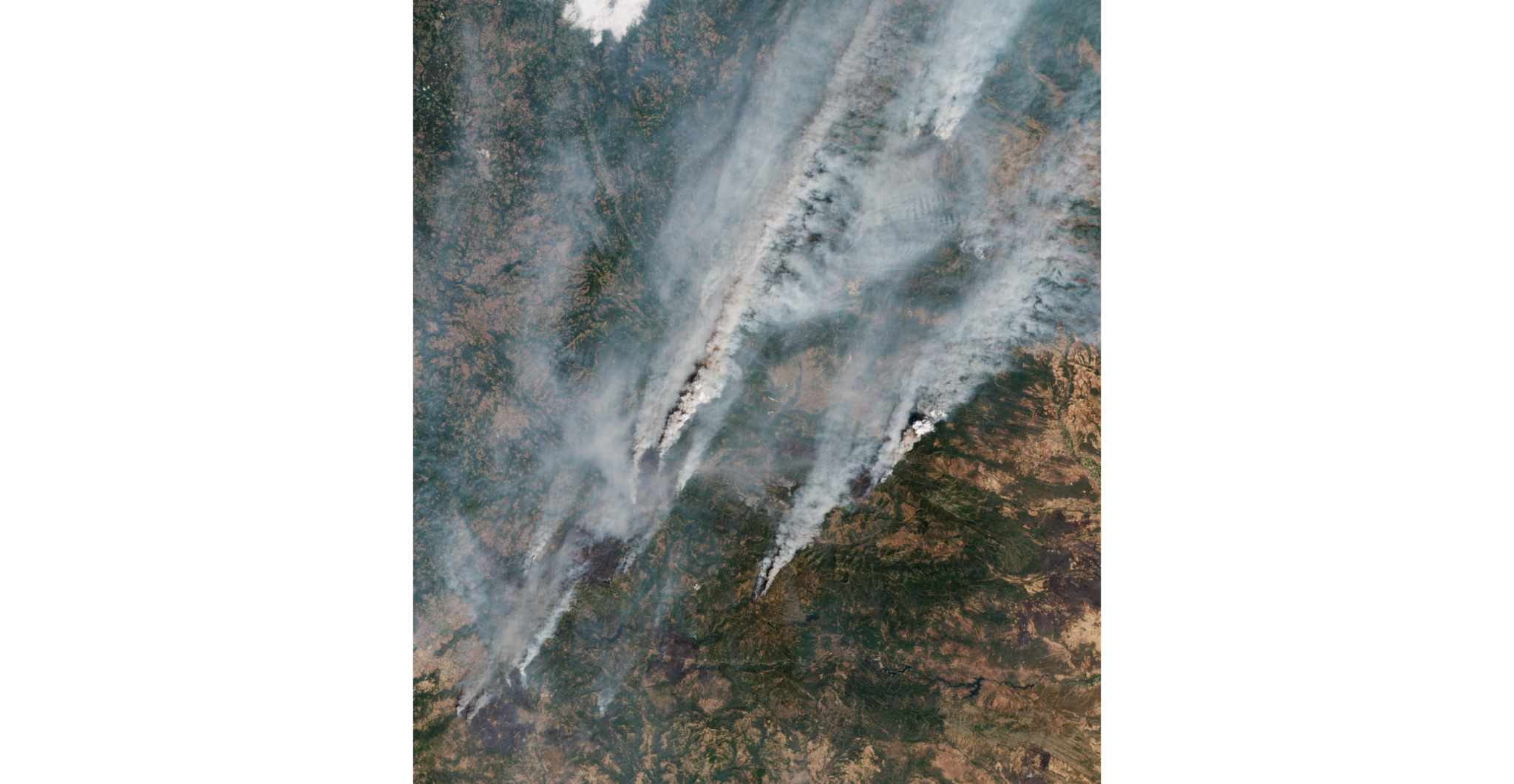
photo4B_ESA_spain_portugal-August_2025-2048×1061
Satellite image of megafires spreading in northeast Portugal and northwest Spain, acquired on August 16 2025 by the Copernicus Sentinel-2 mission. – Credit: Copernicus Sentinel, ESA
“In the specific case of the northwest Iberian Peninsula -Galicia, Asturias, and Portugal – there’s a brutal number of fires, thousands every year. These are lasting not only through the summer months, but also beyond that, with large areas burning as late as October and November”, explains Adrián Regos, a Ramón y Cajal postdoctoral fellow at the MBG-CSIC in Spain.
According to Thierry Gauquelin, ecologist and professor at the Mediterranean Institute of Biodiversity and Marine and Continental Ecology of the University of Aix-Marseille, climate change could result in wildfires being more frequent, more intense, and affecting regions that they didn’t until now: “Whilst there may be cause for concern in the Mediterranean region regarding the emergence of uncontrollable megafires, there is even greater cause for concern in the northern regions of France, where there is no such long-standing history of fires”.
What is burning in Europe?
According to Ioannis Mitsopoulos, assistant professor at the School of Forestry and Natural Environment at the Aristotle University of Thessaloniki, there is yet another critical factor behind the spread of large-scale wildfires: the abandonment of the countryside. “People have left the villages and thus the forests are no longer managed by local communities: grazing has declined, resin production, logging, etc., have all declined, resulting in an increase in forest fuels. Combined with climate change, this has created ideal conditions for numerous wildfires which, if gotten out of control, can become megafires. In Greece, over the last 40 years, 4-5% of wildfires have been responsible for 70-80% of the burnt land”.
This finding explains why the majority of the burnt areas between 2015-2025– more than 2,6 million hectares, an area three times the size of that of burnt dense forests – consists of scrublands, grasslands, regenerating woodlands, as well as abandoned agricultural lands reverting to natural vegetation. Thodoris Giannaros of the National Observatory of Athens, clarifies that these areas are classified as forests, and that their burning carries a significant environmental toll.
Only a few countries, namely the Czech Republic, Sweden, Finland and Slovenia, have so far recorded periods of wildfires in areas consisting mostly of dense tree forests.
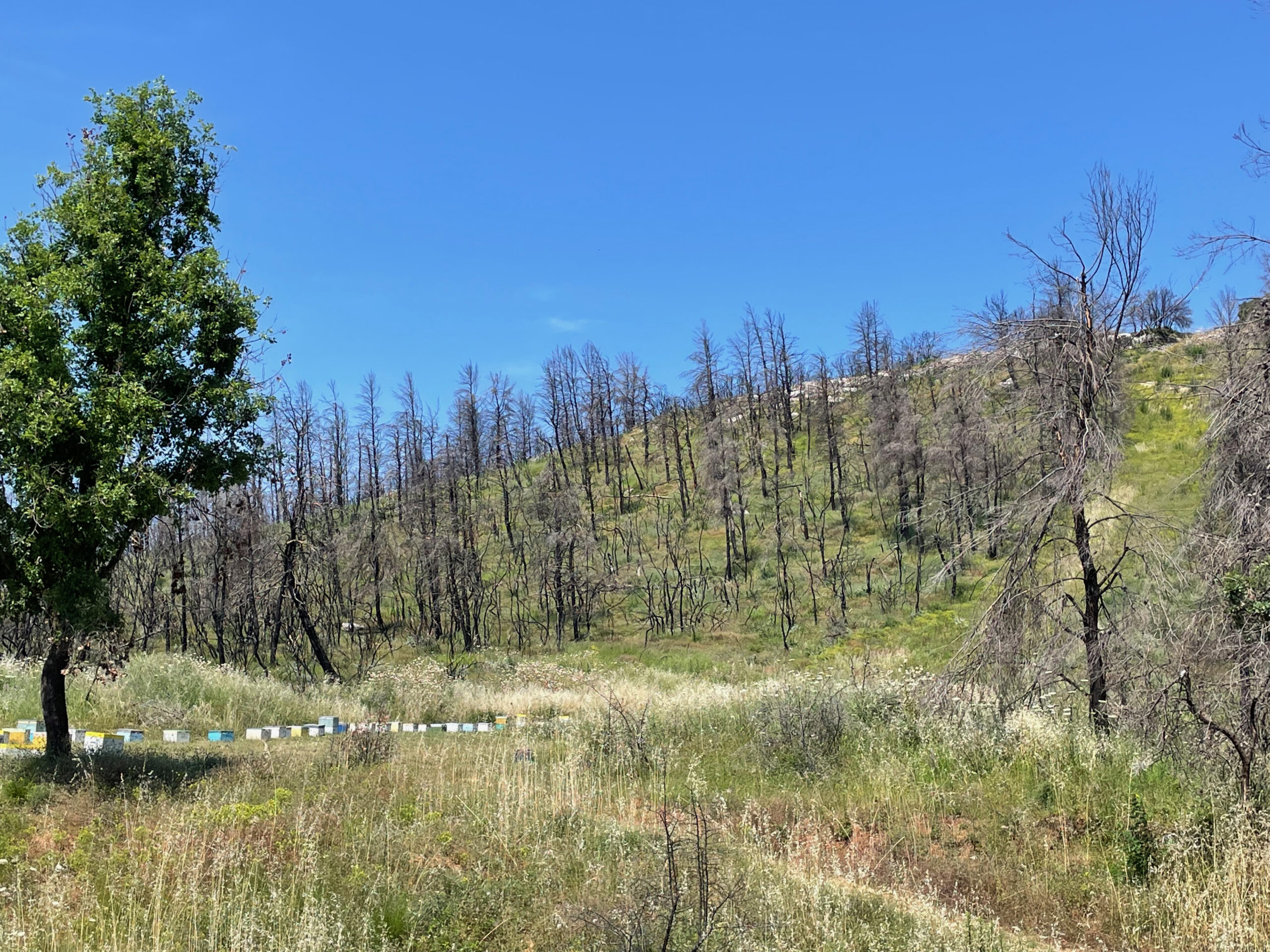
photo5_Evia-GR_bees_2022
Beekeepers returned to Northern Evia in the spring of 2022 to resume their farming activities amidst the scorched landscape, destroyed by the megafire that tore through the island in 2021. – Credit: MIIR
The analysis also highlighted the significant damage suffered by the agricultural sector as a result of wildfires, with at least 926,000 hectares of agricultural land affected – more than one-fifth of the total land burnt.
The area of affected agricultural land increased significantly after 2020 and reached an all-time high in 2025. Italy topped the list, with almost 260,000 hectares burnt over the last decade, followed by Portugal (232,000 ha), Spain (179,000 ha) and Greece (128,000 ha). Bulgaria, Romania and Croatia also suffered significant agricultural losses.
“We need to rebuild effective policies so that these areas are not abandoned by farmers and livestock herders”, Francesco Bivona, former mayor of Regalbuto in inland Sicily, told Openpolis. “Their presence is a fundamental safeguard against fires and hydrogeological instability”.
Protected areas in flames
One of the most significant findings of the study emerged upon overlaying fire perimeters with the official Natura 2000 dataset to identify fire-affected protected areas: Out of the total 4,5 million hectares burned in the entire decade, nearly 1,3 million overlapped with Natura 2000 protected lands. Indeed, for some years (2018, 2022, 2023), more than a third of the total burned areas fell into protected areas.
The analysis also identified 147 Natura 2000 sites across Europe that were hit by large wildfires in at least two separate years between 2015 and 2025. This recurrence pattern is mostly affecting countries like Portugal (Serra da Estrela) and Spain (Galicia, Castilla y León and mountain ranges close to the Portuguese border). Even Ireland has a small number of recorded large wildfires in Natura sites.
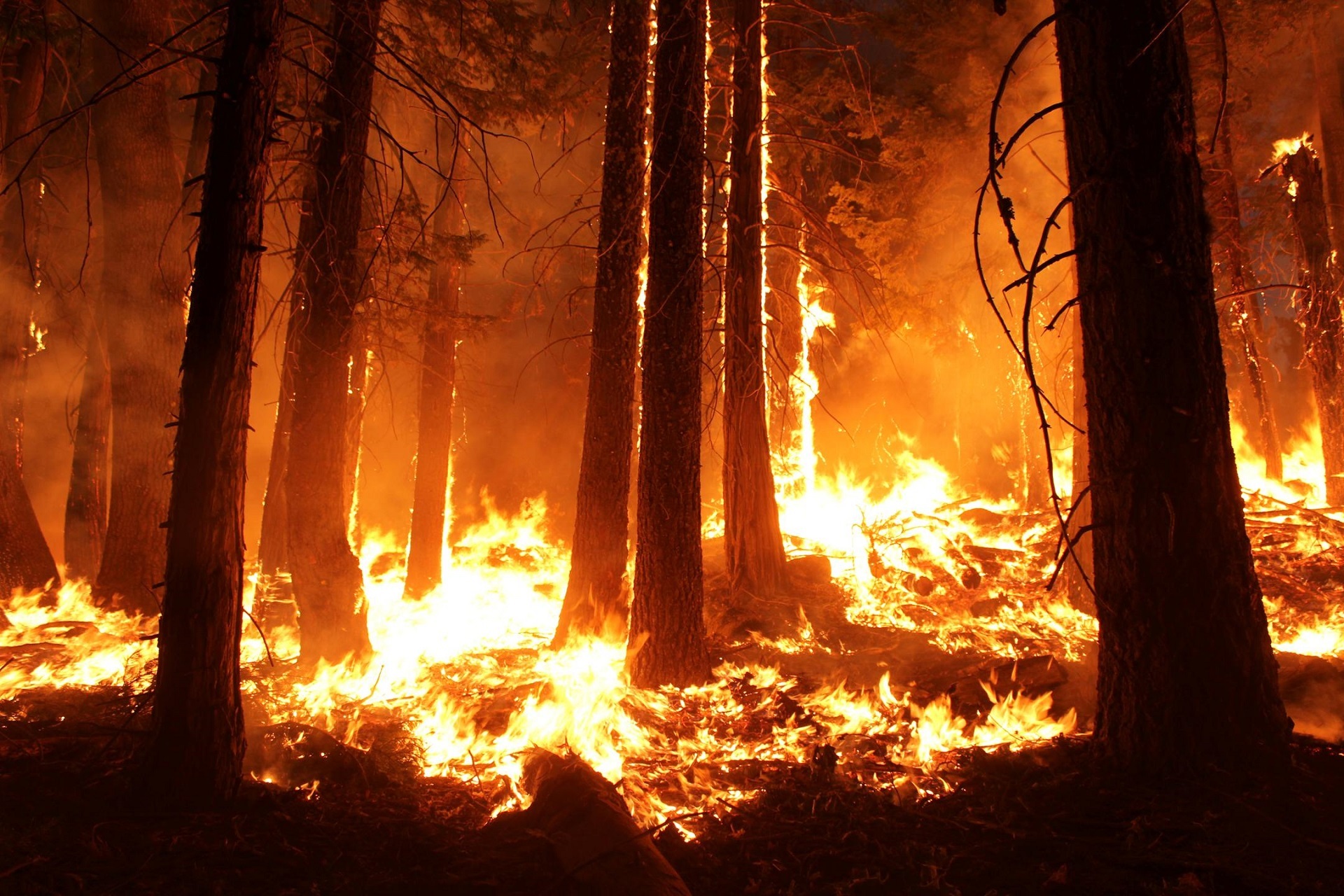
photo6_Wildfire_ESA_2020_pixabay
Firefighters are struggling to contain wildfires raging across Europe. – Credit: Pixabay
MIIR’s analysis shows that in Greece the most valuable ecosystems are also under constant pressure from recurring wildfires, and cannot be considered isolated incidents. Compared with Spain and Portugal, the number of wildfires in protected areas is lower in Greece. However, the extent of the affected areas is significant, both on the mainland and in island ecosystems. The fires of 2022 and 2023 in the Dadia forest and the wider Evros region affected 63,336 hectares of protected ecosystem. Natura sites were repeatedly burnt in at least two fires between 2015 and 2025, in Parnitha, the Gerania Mountains, northern Chios, southern Mani, Mount Kantili in Evia and parts of Zante.
Another European area that merits interest is the Romanian Danube Delta region, which appears to be one of the protected areas with the most fires in the examined decade: 13 fires during multiple years in the fire season. However a closer look reveals that more fires (66) occurred between November-March. As part of its “Wildfires in Europe” series, EDJNet has previously shed light on this phenomenon -mostly attributed to vegetation fires- as well as the problems it causes for the local population.
Beautiful forests are beautifully burning again
“The recurrence of wildfires in the same area is perhaps the biggest problem we face at the moment. A mature Mediterranean ecosystem will recover naturally from a fire. However, if it is burnt two or three times over an approximate twenty-year period, it will eventually be led towards degradation and desertification”, Ilias Tziritis, a Wildfires Actions Coordinator at WWF Greece, tells MIIR. “The North-eastern Attica region had previously been burnt in 2009, and was again consumed by wildfires in 2024. Shrubs and trees in the very important process of regeneration were consequently destroyed in some areas”.
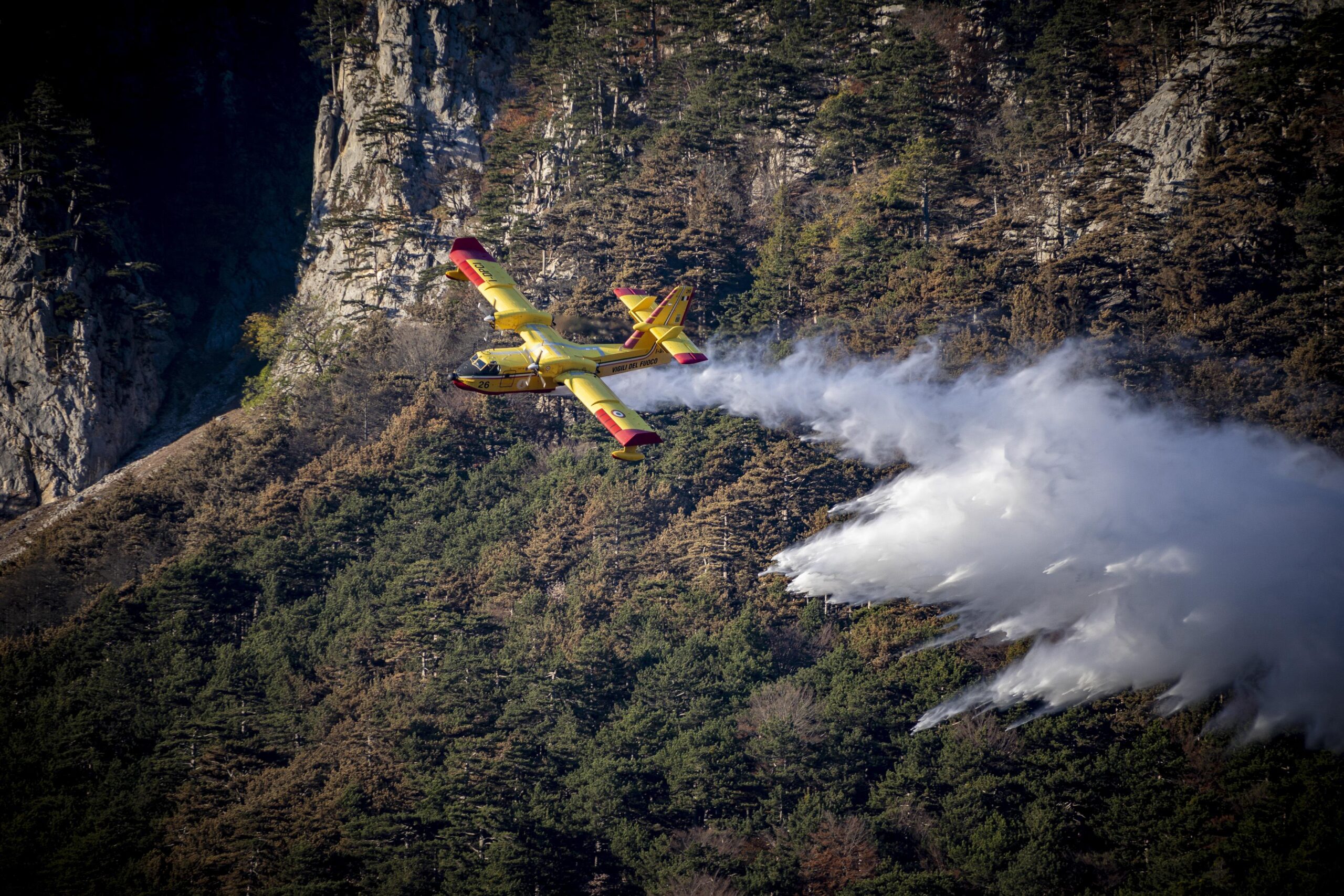
photo8-canadair-6768428
Out of the total 4,5 million hectares burned in the entire decade in Europe, nearly 1,3 million overlapped with Natura 2000 protected lands. – Credit: Pixabay, ESA
According to EFFIS data processed by the National Observatory of Athens, 13 major wildfires in the Attica Region between 2017 and 2025 destroyed at least 46,500 hectares of forest, representing 38% of the total forest area surrounding the Greek capital. This leaves the other 62% available for any future use…
Attica is also among the 20 regions classified as being at ‘high risk’ in the MIIR analysis. These are the European regions with the largest area burnt, accounting for more than three-quarters of the total area burnt between 2015 and 2025 – and which are likely to be at risk of burning again due to extreme or mega-fires.
The list also includes the wider Central Greece, the Peloponnese and Eastern Macedonia and Thrace. The remaining regions are also located in southern Europe, as shown in the table below.
The challenge of restraining megafires
“Wildfires are becoming more ferocious and more destructive across Europe, with catastrophic consequences for our lives, the environment and economies”, Jessika Roswall, Commissioner for Environment, Water Resilience and a Competitive Circular Economy, stated in March. The European Commission announced in June the deployment of the “largest-ever wildfire response force” to tackle forest fires: 777 firefighters, 22 firefighting airplanes and 5 helicopters would be ready to support countries under pressure this wildfire season. It is precisely these units that have since yesterday been deployed to the fire-fronts in Spain and France, under the umbrella of the EU Civil Protection Mechanism. But are such suppressive measures enough?
Experts agree that the toughest challenge today is the increasing severity of wildfires and the realization that this cannot be tackled without implementing preventative measures.
“We must realise at some point that aeroplanes are not enough. If we now spend 10 euros, 3 are spent on prevention and 7 on suppression. This ratio needs to change; we must at least aim for a 50-50 split. Portugal has achieved a 60-40 split in favour of prevention and is seeing better results. We also need to improve pre-emptive planning, so that we can reach the source of a fire within the critical first half-hour of it being reported”, emphasises Ioannis Mitsopoulos, associate professor at the Aristotle University of Thessaloniki.
According to Ilias Tziritis of WWF Greece, the challenge in the Mediterranean is to make wildfires less destructive. “We don’t have more wildfires than we did before. In fact, data show less wildfire incidents in the Mediterranean region. But we have worse conditions and larger fires burning with greater intensity. When the Feneos forest (in the Peloponnese) burnt with such intensity as it did, that means something. We are paying the price of a longtime absence of management and gaps in planning and prevention implementation in the field”, he says.
In Greece, the new “Active Battle” law is now in force; it is a legal framework that focuses on prevention and has so far been well-received. However, as Ilias Tziritis points out, these measures take years to yield results. “Prevention takes time, patience and perseverance. It will take systematic work to rightly implement the provisions of this law”.
Funding is key to this process. A year ago, the European Court of Auditors (ECA) noted in its report a lack of transparency in the way the Commission and member states handle EU funds – primarily sourced from the Recovery and Resilience Facility (RRF)- for forest fire prevention, preparedness and recovery. It also pointed out that several funded projects were based on outdated information and lacked long-term planning.
In total, at least €3.5 billion has been earmarked for tackling forest fires in the EU between 2021 and 2027.
For Greece, which had requested €837 million, the ECA reported that there had been delays in the take-up of funds and some reallocations of resources that had already proved costly. The FireWatch Forest Fire Observatory, set up by data journalist Thanasis Troboukis, has analysed 6,247 published contracts (excluding those resulting from international tenders) covering the years 2024–2026 -including 1,008 direct awards in 2026 so far- and has calculated the total expenditure to date for cleaning services, equipment supplies and infrastructure projects at €810 million. There is no way of knowing, however, which contracts may have been fulfilled or delayed.
The new European normal
In Chios, Sotiris Theodorou and the residents affected by last August’s wildfire have set up two civil groups (the Amani Defence Committee and the Association of Fire Victims) in order to contest the compensation that was promised to them by the Greek state. They claim that they were left to their own devices, with minimal firefighting resources, to tackle a fire that spiralled out of control from the very first day.
Since 2016 Chios has witnessed 22% of its land ravaged in wildfires. About 10,000 of the total 18,000 hectares of burnt land were scorched in last year’s two major wildfires, resulting in heavy consequences for the natural environment and the local economy.
For those left to live in the aftermath of the fires, the decision to remain in the place where they lost everything is not an easy one. It is a future marked by a struggle for survival, legal battles and a test of mental resilience. “We are trying to claim what is rightfully ours: state compensation, and the attribution of civil and criminal liability,” says Theodorou. “There’s no way we’re leaving our home, however much we might want to. We’ll stay in Amani, we will fight and we will live here. It’s a place that can be rebuilt.”
The fires in Europe, which has been hit by three extreme heatwaves in 2026, have already burnt an area larger than the annual average of previous years, as shown by EFFIS data. Rising temperatures and prolonged major wildfires – not only in southern, but also in central and northern Europe – suggest that Europeans will henceforth be constantly confronted with major wildfires and pyro-meteorological conditions that will continue to threaten human lives and ecosystems struggling to survive.
Experts say that wildfires are the result of the previous winters. Europe must realise – even at this late stage – that another well-known saying, also applies to megafires: “If you fail to prepare, you are preparing to fail”.
This article is published in collaboration with the European Data Journalism Network within the ChatEurope project and is released under a CC BY-SA 4.0 licence.
The following media partners collaborated for this project: MIIR (Greece), Openpolis (Italy), Civio (Spain), Voxeurop (France), European Correspondent (Belgium), The Journal Investigates (Ireland), EUurologus (Hungary).
Fact-checking for the data analysis was conducted by Kata Moravecz (EUrologus).
The project’s scrolly-telling presentation was produced by Krisztián Szabó (Atlatszo).
Original source: https://miir.gr/en/the-age-of-megafires-2/

