
Mapping greenery in Europe: how green is your city?
Living close to nature is nowadays a luxury that only a small portion of the European population can enjoy. Several criteria are used to assess the level of greenery in European cities, and a map can now help visualizing the level of access to urban nature for residents.
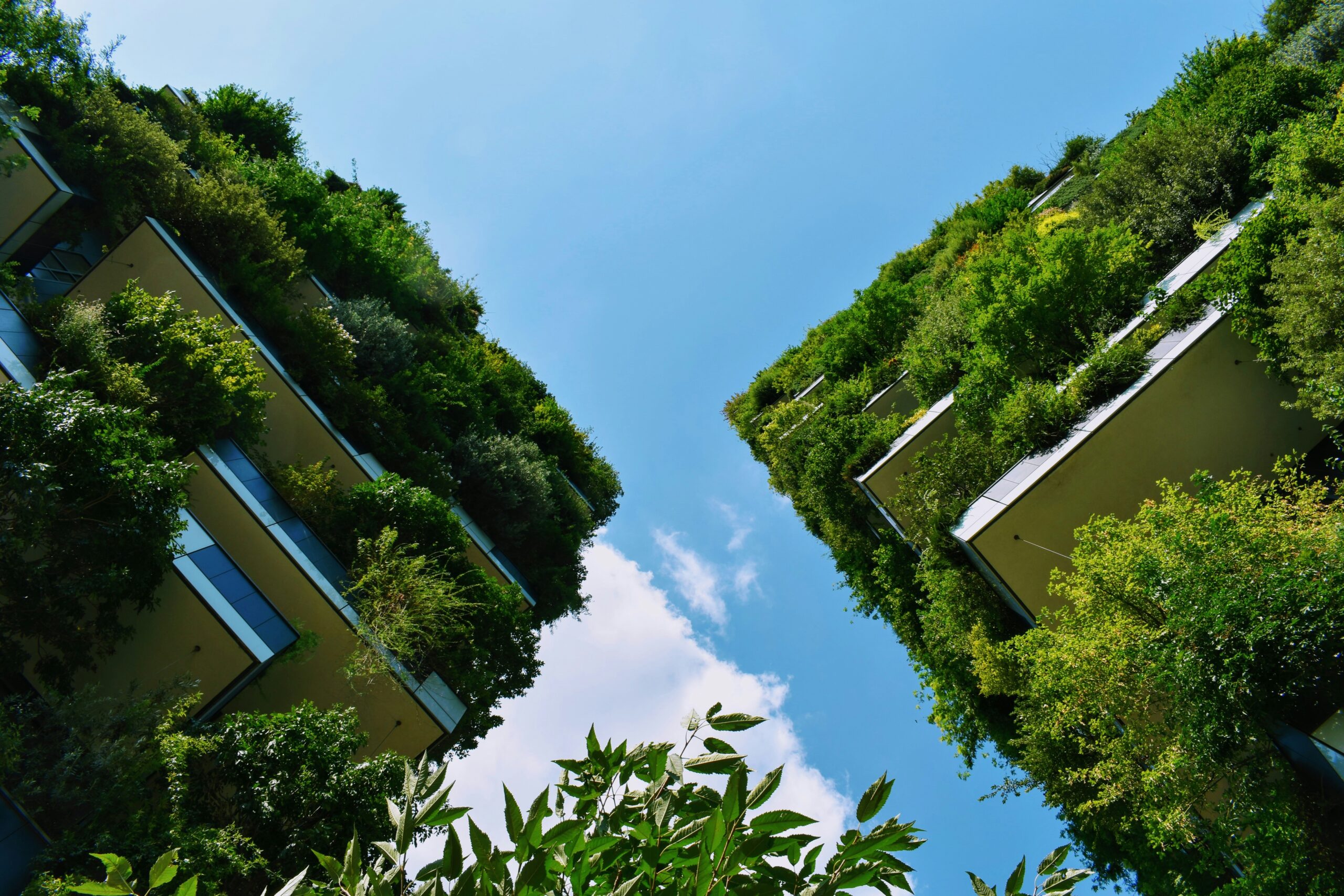
© Gábor Molnár/Unsplash
Seeing at least three trees from your window, living in a neighbourhood where tree canopies cover at least 30% of the ground, and having a park within 300 metres of your home. This is a luxury afforded to only 2.4% of city dwellers in Spain – and only 13.5% in Europe – according to a study published in Nature Communications by researchers from the Joint Research Centre and the University of Copenhagen.
The study analyses whether greenery in 862 European cities meets the 3-30-300 principle. This rule, proposed in 2021 by Dutch researcher Cecil Konijnendijk, aims to ensure widespread access to urban nature for every resident to promote greener and healthier cities. The results of the study can be viewed, street by street, on the map at the top of this article.
The data shows that 57% of Europe’s urban population lives within 300 metres of a park and almost half can see at least three trees from their home (46.7%). Conversely, only 28% live in neighbourhoods where tree canopies cover at least 30% of the ground.
The data shows that 57% of Europe’s urban population lives within 300 metres of a park and almost half can see at least three trees from their home (46.7%). Conversely, only 28% live in neighbourhoods where tree canopies cover at least 30% of the ground.
The study also shows that cities in northern and central Europe are consistently greener than those in the south. The gap is explained by different planning traditions, but above all by the climate. Among cities with a similar GDP per capita, those located in more humid climates have greater access to green spaces.
“We cannot demand that Barcelona become Stockholm, but we can implement green initiatives with plants that suit the local climate,” explains Sasha Khomenko, a postdoctoral researcher at the Barcelona Institute for Global Health.
Across Europe, there are only two major cities where more than half of their population satisfies the 3-30-300 principle: Espoo, in Finland, and Varese, in northern Italy. In Spain, San Sebastián leads the way with 34.8% of its inhabitants meeting the principle. It is followed by Girona (16.3%), Irún (10.7%) and Marbella (9.4%).
Viladecans, the Spanish experiment
Even so, the main champion of the 3-30-300 principle in Spain is in the Barcelona metropolitan area. Viladecans has pioneered a street-by-street analysis of compliance to the principle, which has enabled it to identify structural limitations to its implementation, such as the existence of narrow streets or neighbourhoods where building a park would require demolishing buildings.
In its quest to improve urban greenery, the council plans to plant 5,000 trees in the coming years, aiming to reach 30,000 by 2030.
On a Mediterranean coastline that is not immune to periods of drought, maintenance of trees is made possible by the ‘sponge city’ concept, a network of pipes that collects rainwater from rooftops and streets and feeds it into an underground aquifer used to irrigate urban green spaces.
“I am leading this initiative not to attract more people to live here or to set an example in this field, but because it is my city and we believe it must be as healthy as possible. Cities are the ground zero of climate change,” says Jordi Mazón, deputy mayor of Viladecans and professor of Physics at the Polytechnic University of Catalonia.
Wealthier neighbourhoods are greener
The study led by Bertassello has also shown that in Spain, wealthier areas have more urban greenery than poorer ones. This trend is particularly evident in Madrid, Barcelona and San Sebastián, whilst cities such as Bilbao and Guadalajara reverse the pattern.
“It depends on historical conditions and how each city has been organised. When higher-income residents live in the city centre, cities tend to have less green space and are more exposed to pollution; but sometimes those residents move to the outskirts, where there is more space and green areas,” explains Khomenko.
“This gap has consequences, as the most disadvantaged socio-economic groups are also the most vulnerable to urban heat. We should try to improve these groups’ access to green spaces because it would help tackle climate change,” suggests Bertassello.
Urban heat stress is responsible for 4.3% of deaths occurring in summer, according to a study published in The Lancet based on data from 93 European cities. The research revealed that 30% tree canopy coverage would prevent 1.84% of premature deaths during the summer period and nearly four in ten of those attributable to urban heat.
That tree coverage is, precisely, the criterion of the 3-30-300 principle that European cities are furthest from achieving. “30% tree coverage is a great deal: if we were to achieve it, our cities would look more like urban forests,” notes Bertassello. In Spain, it is quite simply “a dream that is very difficult to fulfil”, laments Pedro Calaza, president of the Spanish Association of Public Parks and Gardens. “We’re not surprised by that, as the principle, the assessment of our cities and the targets set for urban tree coverage are relatively new,” explains Konijnendijk.
The challenge grows with urbanisation. “The denser the cities are, especially those with historic centres and rigid infrastructure, the greater the difficulties in promoting significant transformations,” acknowledges Pedro Lira, founder of the architecture studio Natureza Urbana.
Despite this, “many cities have tried to provide at least some trees on most streets and ensure that people have a public park or other green space near their homes,” observes Konijnendijk.
An impossible goal?
Despite the evidence of its benefits, 3-30-300 remains, for now, merely a principle. Its adoption requires a plan with defined objectives, timetables, responsibilities and allocated resources. “There is a risk that 3-30-300 will remain nothing more than an attractive slogan used primarily for greenwashing,” warns Konijnendijk.
In Bulgaria’s capital, Sofia, some property developers, obliged to demonstrate the existence of green spaces in new residential developments, rent planters with trees in them which, once the inspection is over, they remove and reuse on other sites.
Legally speaking, the European framework remains voluntary. The 2019 European Green Deal and the 2021 European Climate Law set a target of climate neutrality by 2050 and commit the EU to making European cities greener, but without a specific quantitative mandate.
The European Nature Restoration Regulation, in force from 2024, obliges Member States to ensure that each country’s green space and urban tree coverage do not decrease until 2030, and increase in the following years. Even then, it allows urban areas that already exceed 45% green space and 10% tree coverage to be excluded from this rule.
Some European cities have decided not to wait. In March 2025, Florence approved a Green Space Plan that explicitly adopts the 3-30-300 rule, with the aim of adding 50,000 trees and shrubs by 2030.
Paris, constrained by historic density, is focusing on micro-interventions such as removing paving from school playgrounds and turning them into ‘oases’ with vegetation and water. The French capital aims to reach a 40% permeable and vegetated surface area by 2040, whilst Nantes plans to remove paving from 14 hectares to replace asphalt with permeable ground featuring vegetation.
Nature does not come free in many neighbourhoods. Green gentrification, whereby greening neighbourhoods can increase value, driving out original residents, accompanies many of these initiatives. “If we green our cities equitably and across neighbourhoods, this will be a minor problem,” argues Konijnendijk, who also highlights the rent and house price controls being trialled in capitals such as Vienna.
Often, plans die before they can flourish, as political impetus rarely extends beyond a single term of office. “A walnut tree takes more than 30 years to provide shade. Why isn’t planning done with that timescale in mind?” asks Rufino Hernández Minguillón, Professor of Architecture at the University of the Basque Country.
Despite the current hurdles, there is also room to dream bigger. Konijnendijk himself is already imagining a fourth figure: 3,000. This could mean 3,000 square metres of wild nature in every neighbourhood, or a safe, green 3-kilometre walk accessible from every home.
Check out the methodology here.
Original article: https://www.elconfidencial.com/medioambiente/2026-05-19/ciudad-verde-regla-holandesa-barrio-saludable_4356013/
This article is part of the PULSE collaborative project. Gian-Paolo Accardo (Voxeurop), Lorenzo Ferrari (OBCT) and Zornitsa Lateva (Mediapool.bg, Bulgaria) contributed to it.
