
Sustainable fashion: are European brands as committed as they claim?
Clothing brands and sustainability commitments are becoming more and more intertwined, but a lot of these targets are quite long-term, making it difficult to keep them accountable.
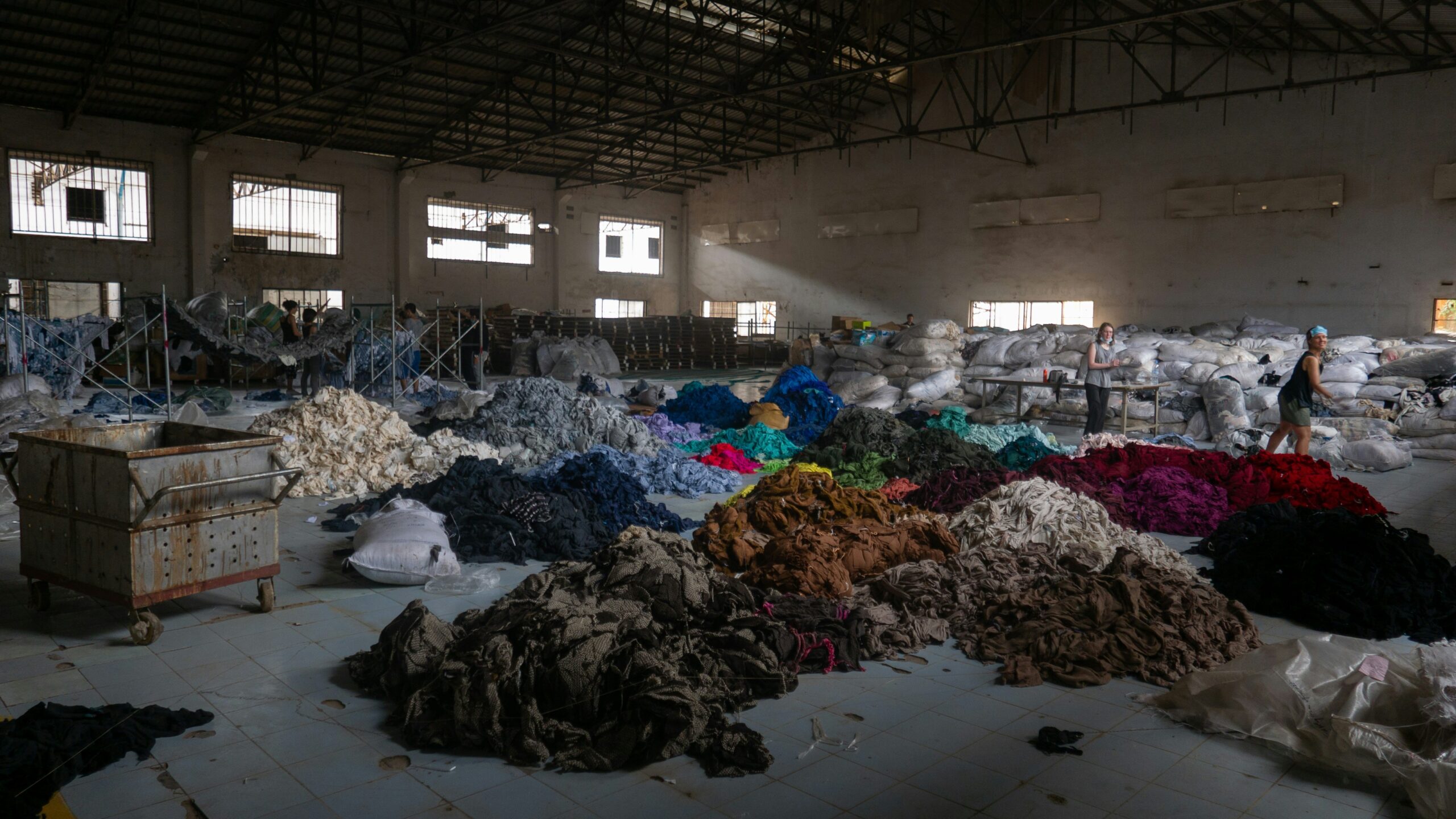
© Francois Le Nguyen / Unsplash
The clothing industry is responsible for between 2% and 7% of global carbon dioxide emissions. Most of these emissions are generated by the energy required for clothing production, including the cultivation or extraction of the raw materials needed to produce fibres, as well as the spinning, dyeing and weaving processes. Add to this the consumption of water and chemicals used by the textile industry.
The industry therefore plays a key role in reducing CO₂ emissions and pollutants, and European regulations, such as the Corporate Sustainability Reporting Directive (CSRD), set increasingly stringent criteria for the industry in terms of environmental, social and governance (ESG) standards. In recent years, brands in the sector have stepped up their environmental commitments, setting targets and deadlines to improve their performance. But how far off are these deadlines? And when will it be possible to verify whether these promises have been kept?
An analysis of 468 sustainability pledges from the 17 leading clothing brands – fast fashion, sportswear and luxury – carried out by Deutsche Welle (DW) for the European Data Journalism Network reveals that, by 2024, “overall, companies had achieved around half of the targets set for past deadlines. One in three targets had not been met, and the status of the rest is unclear.”
The chart below summarises the number of commitments made by the brands analysed and the timeframe for their implementation.
Given this context, what about the subsequent deadlines and commitments? Based on the analysis carried out by DW, it appears that around a third of the ESG commitments made by companies in the clothing sector have a deadline beyond 2025. The distribution of target years is not uniform. Commitments are concentrated around a few key deadlines, with companies aligning their pledges with the main timeframes of European climate policy. 2030 is at the heart of the European Green Deal, which aims to reduce CO₂ emissions by at least 55% compared to the reference year of 1990. 2050, on the other hand, marks the European Union’s climate neutrality target.
2025 serves a different purpose. Rather than corresponding to a major political deadline, it marks the end of corporate strategic cycles (usually 3–5 years) and the first reporting obligations linked to the CSR Directive. This relatively near date makes the commitments verifiable.
The further one moves away from this date, the more uncertain verification becomes. The 2030 and, above all, 2050 deadlines are set to bring about profound transformations, but in a future where accountability may be more challenging to enforce. A ‘cluster’ distribution emerges: the pledges are not sequential, but concentrated around politically significant dates. This shows that time is not neutral in sustainability strategies.
The distribution of the reference years highlights this dynamic.
However, the distribution over time is not the only factor that distinguishes these commitments. There are also clear differences between market segments.
Mass-market brands, including fast fashion and sportswear, concentrate most of their short-term targets around 2025. These commitments tend to be more immediate, linked to operational improvements or targets already integrated into business cycles.
Conversely, luxury brands feature much more prominently in long-term deadlines. From 2030 onwards — and even more so for targets set for 2050 — the majority of pledges come from this segment. The most distant pledges — and therefore the most difficult to verify — are concentrated among the most exclusive brands.
This difference becomes even more evident when considering the feasibility of assessing these commitments. A significant proportion of them cannot yet be evaluated. As we have seen, around a third of the pledges have a deadline beyond 2025 and therefore remain outside the scope of any current verification.
The distinction is simple: targets set for 2025 can be measured today, at least in theory; those with later deadlines, including most 2030 and 2050 commitments, cannot.
This difference concerns not only time, but also the conditions of accountability. Until a deadline is reached, commitments are difficult to verify and therefore less exposed to public or regulatory pressure.
Differences between sectors are also evident from this perspective. Promises that cannot yet be assessed are largely concentrated among luxury brands, which dominate long-term targets. Conversely, mass-market brands feature more prominently among commitments that are already verifiable and linked to shorter time horizons.
The result is that a significant proportion of corporate sustainability strategies effectively remain beyond the scope of immediate verification.
This raises a broader question about the meaning of sustainability commitments. Long-term deadlines may reflect genuine changes, such as decarbonisation and the reorganisation of supply chains, that take years to implement. However, they also shift verification into the distant future, where political, economic, and even corporate conditions may have changed, rendering them beyond the scope of current verification and control mechanisms.
“It is up to companies to demonstrate the validity of their claims. It is not up to society to investigate or prove how the company intends to achieve its stated goal. The company must demonstrate this and must clearly indicate the measures and resources it intends to devote to achieving that goal,” explains Bianca Morales, Head of Sustainable Consumption and Production at BEUC, an organisation representing 42 European consumer associations.
“That is why, in the proposal for European legislation we presented in 2013, we called for companies to submit emissions reduction plans every two years, and for these to be regularly verified on a scientific basis,” continues Morales: “Commitments must be aligned with the Paris Climate Agreement. This means that a company cannot have its own interpretation of climate neutrality. What it commits to achieving by 2050 must be in line with the CO₂ budget available to it to remain below the 1.5°C warming limit compared to pre-industrial levels, and its trajectory must be consistent with this objective. Consumers must be able to trust that companies are honouring these commitments.”
Fortunately, consumers are not defenceless: European regulations designed to protect them provide the tools to enforce this accountability. In particular, “the Unfair Commercial Practices Directive of 2006 prohibits misleading commercial practices, including environmental claims not backed by verifiable evidence,” emphasises Morales. This principle has already been applied in several recent cases, she notes, such as “the fine imposed in 2025 by the Italian Competition Authority on the Chinese fast-fashion giant Shein for greenwashing, or the one imposed the same year by the Paris Civil Court on the French oil and gas giant TotalEnergies for misleading or deceptive statements in certain communications regarding the company’s climate strategy”.
With the aim of strengthening corporate accountability and consumer rights, the new Empowering Consumers for the Green Transition will apply from September 2026. It “makes the measures of the 2006 Directive even more explicit”, explains Morales, and it is particularly significant because it directly strengthens the rules on unfair commercial practices by amending existing legislation.
In practical terms, it introduces explicit bans on various forms of greenwashing. For example, generic environmental claims such as “eco-friendly” or “sustainable” that are not backed by solid evidence will be prohibited, as will claims of ‘climate neutrality’ based solely on CO₂ offsetting. Furthermore, it imposes stricter conditions on promises regarding future performance, requiring them to be verifiable and backed by concrete evidence. Essentially, long-term commitments, such as those for 2030 or 2050, can be considered misleading if they are not accompanied by verifiable evidence.
Only time will tell whether this will be sufficient to bridge the gaps in previous regulations and the gap between stated ambition and actual accountability.
This article is published in collaboration with the European Data Journalism Network as part of ChatEurope and is released under a CC BY-SA 4.0 licence.
Original source: https://voxeurop.eu/en/sustainable-fashion-greenwashing-commitments/.
