
How fast is European public transport going green?
European cities are trying to reduce pollution in many ways, including by making public transport greener. While valuable, these efforts may not be sufficient to meet the ambitious zero-emission goals set by the European Union.
© harry_nl / Flickr
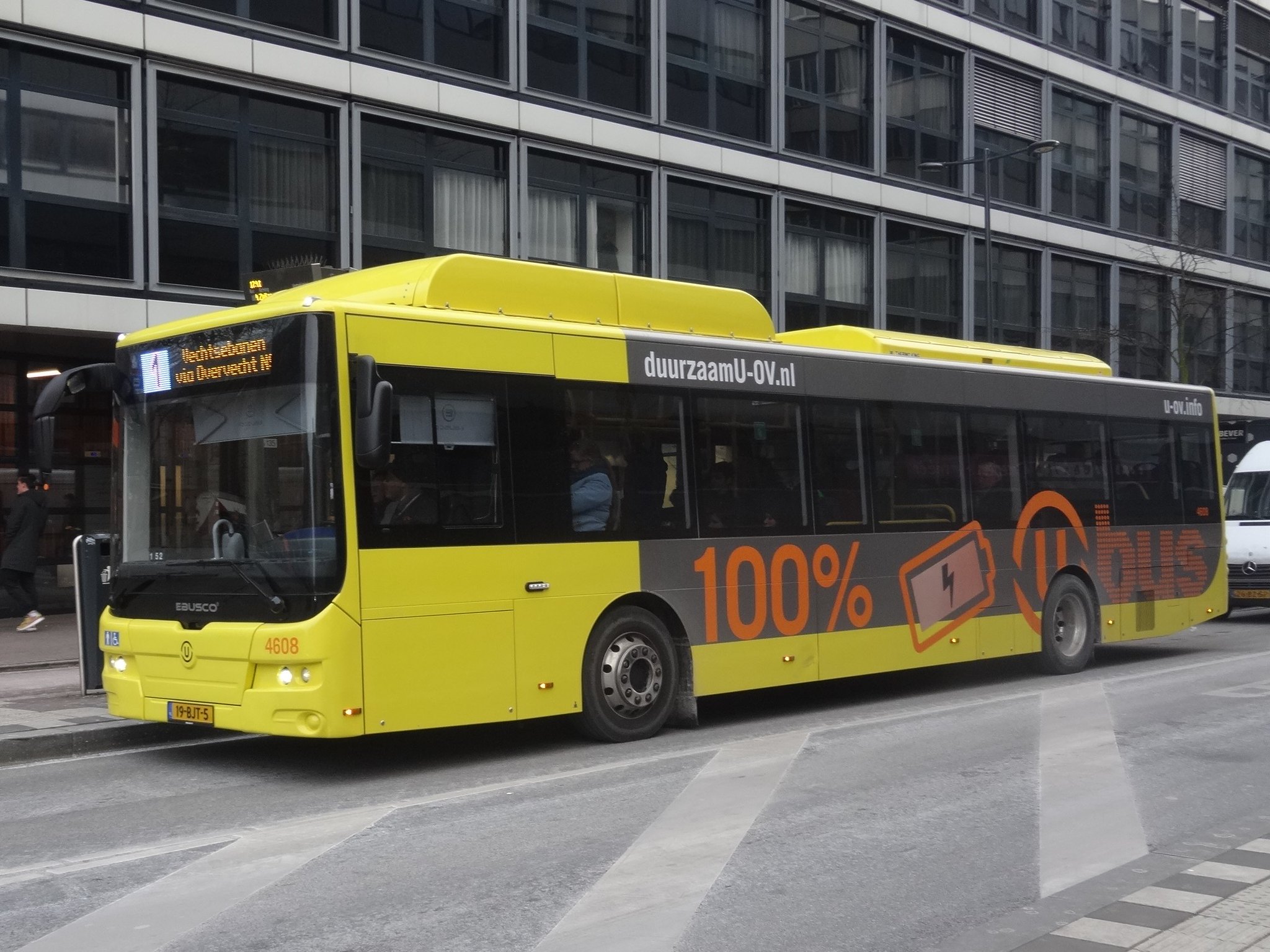
An electric plug icon on their windows makes them easy to spot in cities like Brussels and Madrid. Quietly navigating the streets, electric buses have become an increasingly common sight on Europe’s streets in recent years.
Removing tailpipe emissions from public bus fleets —the gases and particles generated when a combustion vehicle is running — might be “the easiest strategy to improve public transport,” Michela Le Pira, assistant professor of transportation at the University of Catania, in Italy, told DW.
Most Europeans live in urban settings, and road transport has a negative impact on air quality. In 2023, 279,000 deaths across the EU were caused by air pollution levels exceeding the World Health Organization (WHO) recommended thresholds.
Of all fine particulate matter (PM2.5) concentrations in European urban areas, about 14% come from road transport, which includes public but also private and freight transport. Additionally, towns and cities account for nearly a quarter of the European Union’s transport greenhouse gases emissions (GHG).
DW and the European Data Journalism Network evaluated over a decade of data from more than 100 reports and sources on public transit and the emissions it causes, and identified 148 sustainability commitments by local authorities and transport operators in 33 cities across Europe. The analysis focuses on motorized mass transit, leaving out bikes and pedestrians as well as taxis, shared vehicles and e-scooters.
More electric buses, thanks to EU funds
The EU wants to become the first climate-neutral continent by 2050. A key part of that plan is cutting transport-related GHG emissions by 90% from 1990 levels.
Copenhagen is the only EU capital that has electrified virtually its entire bus fleet: Their vehicles do not have combustion engines and therefore do not produce tailpipe emissions. In cities like Rome, Lisbon and Nicosia, over 90% of buses still run on diesel, while metros and trams account for less than 10% of their public transport fleet.
Although cars still dominate European streets, “electric buses are one way to reduce local air pollution,” said Martin Baierl, data analyst with Transport & Environment, an advocacy non-profit for clean transport.
EU funds allowed many cities to increase their electric and alternative fuels bus fleets from 2021 on.
Electric buses are 20% of the total fleet in EU capitals and selected cities. The number of electric buses has increased by 55% between 2021 and 2025, equivalent to 1,234 more electric buses riding. The number of diesel-only buses has been declining since then, although they still outnumber buses running on alternative fuel.
Slow road to sustainability in some cities
In addition to decarbonizing the bus fleet and helping to reduce air pollution, embracing electric models can help with lowering noise and public transport operating costs, more so if the city produces its own electricity, explains Baierl. However, their purchase price is higher than diesel buses. In 20 out of the 31 cities with data to analyze, over 50% of the bus fleet is made up of traditional vehicles.
Brussels, for example, was an early adopter moving away from traditional diesel-powered buses, switching to hybrid buses instead. Now Brussels is in the process of electrifying their fleet, but at a slower pace.
“It’s not easy to know what the right technology will be at the end,” Baierl said.
Another example are hydrogen-powered buses, which also produce zero-emissions but operating them is more expensive than their electric counterparts.
Many cities have not fully committed to zero-emissions despite EU targets
Transportation is the only major sector where greenhouse gas emissions stay above 1990 levels, despite the EU’s ambition of cutting 90% of them by 2050.
Public transport, including buses, trams and metros, is used for more than a quarter of trips in the ten largest EU capitals on average, according to recent data from the non-profit group CDP (formerly the Carbon Disclosure Project). In Stockholm, the share is 49%, while in Ljubljana, a smaller city, it’s 11%. DW analysis of transport sustainability pledges reveals that only four cities have explicitly committed to achieving zero-emissions in buses or all public transport.
Rail transport is climate-friendly, but scarce
Yannis Papadimitriou lives 85 kilometers (about 53 miles) away from Athens, the EU capital with the highest air pollution mortality risk. He travels to work by commuter rail, a means of transport he’d like to see promoted more.
“For me it is a very conscious choice to use electric public transport, especially trains, which are the safest, most environmentally friendly and quickest way of transport.”
Most trains, trams and metros run on electricity, however buses outnumber rail-based options within city boundaries, although in many cities most buses still run on diesel.
Public transport’s emissions go beyond the tailpipe
In Northern Europe, 15 kilometers away from Copenhagen, Poul Kattler also used to commute to work. He is now retired and takes the bus more frequently with his grandchildren. Despite Copenhagen having almost a completely fossil-fuel-free public transport system (only one bus runs on biomethane), the metro expansion, which is responding to the city’s growth, comes with its own set of concerns.
“The whole construction phase [of the new metro line] is extremely environmentally demanding,” Kattler said. If the construction emissions are considered, “the CO2 balance would be very poor for the metro now.”
But in the long run, the benefits of a new metro line in reducing CO2 emissions outweigh its construction-related emissions, Le Pira said.
Combustion or exhaust emissions are not the only way transport pollutes the air and the environment. Indirect emissions, like those coming from electricity generation or fuel production, add to transport’s CO2 footprint. Brakes and wheels release non-exhaust particle matter when wagons or vehicles slow down.
Since 1992, buses and any vehicle running on fossil fuels have been subjected to stricter emissions standards in the EU. Fine particle emissions from buses and heavy-duty vehicles had dropped by 92% in 2022 according to the European Environment Agency. At the same time, overall road transport non-exhaust emissions from tire wear have increased 58% in two decades, as cars got heavier
Shifting from cars to a multimodal transport system
With a few exceptions, EU member states are not close to cutting greenhouse gas transport emissions by 90%, as envisioned by the EU’s 2050 target.
Zero-emission public transport is one step toward decarbonizing transport in cities and meeting GHG reduction goals. The next challenge is to get people out of their cars.
“If we talk about sustainable mobility in general and not only clean public transport, the main problem is the model shift from private cars to public transport,” Le Pira said. Private automobiles make up more than a third of transport mode share on average in the largest EU capitals, according to CDP data.
Cheaper ticket prices for groups, like students, and disincentives for car use, such as low-emission zones, are two complementary ways of attracting more passengers while reducing private transport.
In her research work, Le Pira investigates how public transport can be more efficient and appealing for city dwellers, for example, by combining transport modes where people step off their bikes and onto a train. This kind of solution could be particularly relevant for small cities “where cars are still the main transport mode”.
Places with good public transport draw people in. “Cities where not everybody has to use a car are just more livable,” Baierl said.
Edited by: Gianna-Carina Grün and Sarah Steffen
Fact check: Eva Lopez
DW’s data team contributed research to this project.
For data, code and methodology behind this analysis, see this GitHub repository.
This project is a collaboration among several media outlets in the European Data Journalism Network in context of Chat Europe. Project lead: DW. Contributing partners: Voxeurop, Denik Referendum, EUrologus, OBC Transeuropa.
Original source: https://www.dw.com/en/data-analysis-cleaner-electric-transportation-environment-health-not-hitting-eu-emissions-targets/a-79406721.
