
Energy challenges and opportunities: what can REPowerEU achieve?
REPowerEU, EU's programme included in national recovery and resilience plans, has definitely boosted the process of reducing energy dependency from Russia. However, member states' progress towards climate targets and environmental impact are still to be met.
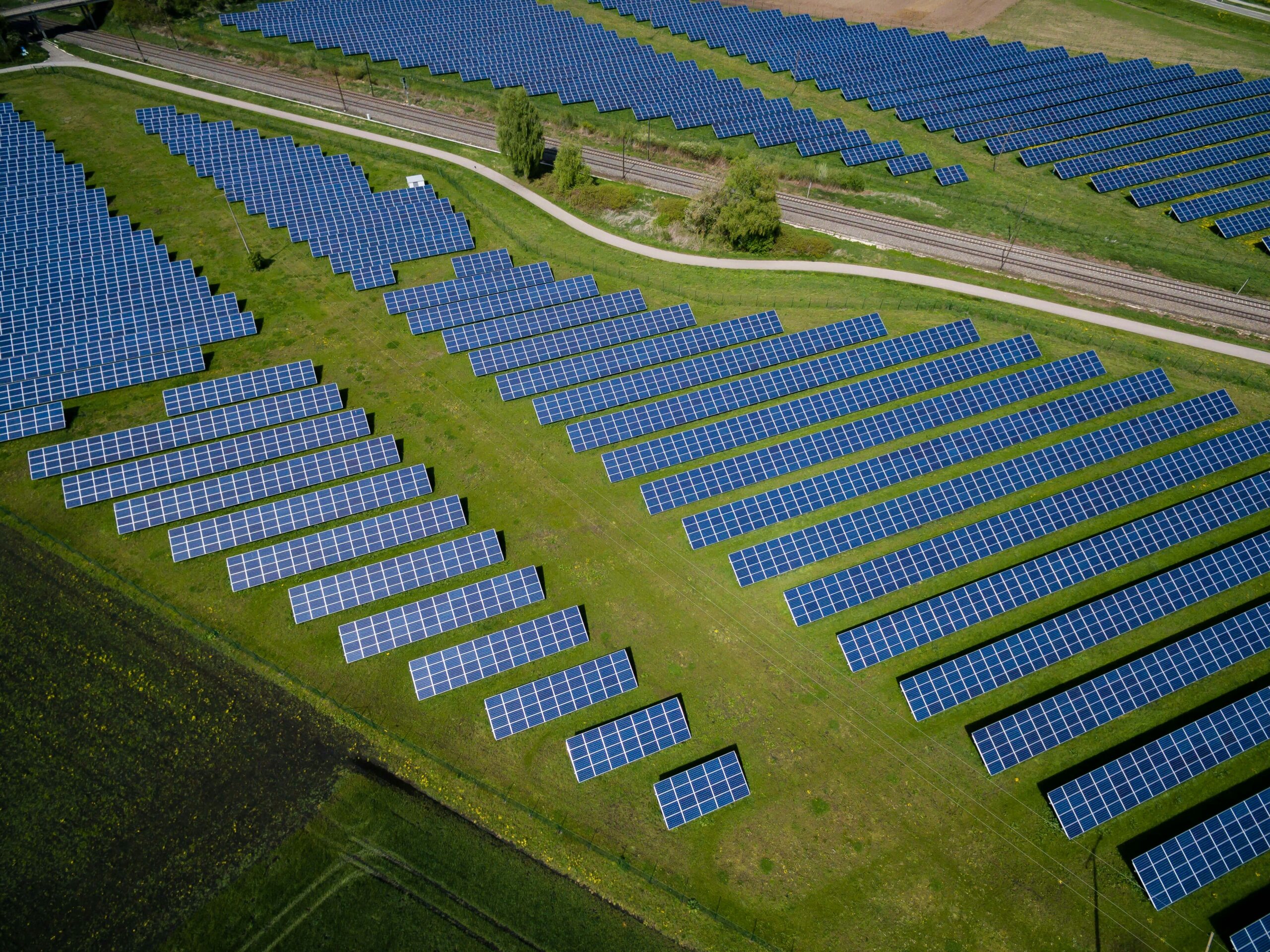
© Andreas Gucklhorn / Unsplash
The climate crisis, the war between Russia and Ukraine, and, more recently, the instability in the Middle East have forced Europe to rethink its energy supply model. On one hand, to make it more sustainable; on the other, to become independent from imports from third countries.
In this context, the European Union has launched several initiatives, including the REPowerEU plan. This programme, together with other tools, has helped address the energy crisis in the short term by reducing or eliminating supplies from Russia. The intention of the European institutions is that this plan should also contribute to achieving the EU’s environmental goals in the medium term, particularly with regard to the 2030 agenda.
KEY FIGURE: 52 billion € the value of the REPowerEU programmes of all European countries.
Included within the national recovery and resilience plans, this chapter dedicated to the energy sector is also set to conclude by the end of this year. However, many projects are still underway, and most of the planned deadlines have yet to be met. For this reason, it is not possible to formulate a definitive and comprehensive assessment of its overall impact.
The aim of this article is to understand what has been funded through REPowerEU, where the various countries stand in implementing the planned measures, and whether the goals set by the Union have been achieved.
What is REPowerEU
Among the initiatives launched by the EU in response to the war between Russia and Ukraine is REPowerEU. This plan, which definitively entered into force with the publication of EU Regulation 2023/435, had as one of its main objectives the reduction of the EU’s dependence on Russia, while simultaneously accelerating the transition towards an energy system based on clean and renewable sources.
In the immediate term, REPowerEU provided for joint gas purchases and new partnerships with suppliers considered more reliable than Russia. In the medium term, however, the plan aims at industrial decarbonisation and the definition of a regulatory framework for hydrogen use.
Areas of intervention focused on:
- strengthening energy infrastructure and facilities;
- diversifying supply sources;
- reducing energy demand;
- improving energy efficiency (especially in buildings);
- decarbonising industry;
- increasing renewable energy production;
- sustainable biomethane;
- hydrogen.
A significant aspect of the plan is its cross-border nature. In fact, at least 30% of the funded interventions had to generate benefits for other EU countries.
There is no dataset providing a precise breakdown of the overall value of the REPowerEU chapters among the various countries, as each chapter can be made up of reallocated national or European funds. However, based on information in the report “REPowerEU – 4 years on“, some estimates can be made. The total amount for all European states exceeds 52 billion euros. The largest share is absorbed by Poland, with its chapter alone valued at approximately 20.6 billion euros. This is followed by Italy (7.2 billion), Spain (6.9 billion), and France (2.8 billion).

Each REPowerEU chapter, moreover, had to separately dedicate at least 37% of total investments to climate objectives. For this reason, states had to specify and justify the percentage to which each measure contributed to this, choosing from among nine possible policy areas. At the European level, the area most involved in investments is renewable energy and networks (53.5%), followed by energy efficiency (29.8%) and sustainable mobility (8.6%).
It is interesting to note that most European countries have concentrated their chapters on a limited number of areas. In fact, in 18 states, no more than three policy areas are involved. Among the countries with the largest chapters, Italy’s choice stands out as going against the trend, with its investments touching as many as six different areas. Only Croatia has a more diversified programme.
Where REPowerEU deadlines stand
Although the REPowerEU chapter was only introduced at the end of 2022, it shares the same final deadline as the rest of the national recovery and resilience plans. The timeline for completing milestones and targets also ran out on 30th June of this year, with the final payment request having to be sent to the European institutions no later than 31st August. For this reason, it is particularly important to assess the level of completion reached by the various national plans.
At the European level, the REPowerEU chapters generally lag behind the broader Recovery and Resilience Plans in terms of completion. This is not surprising considering that they started approximately two years later. The total measures planned are 535, of which 251 are investments and 184 are reforms. As of 23rd June, only 37% of deadlines had been fulfilled. That is a full 22 percentage points below the average completion level of the Recovery and Resilience Plans (59%).
Looking at individual countries, the Netherlands is furthest ahead in implementing its REPowerEU plan, having completed 80% of its deadlines. It is followed by Czechia (73%) and Austria (70%).
The EU’s strategies against the energy crisis
Not only individual states, but also EU institutions have taken action in the energy sector. The work has focused on three main lines: aggregating demand to obtain more advantageous conditions, diversifying supplies, and producing clean energy.
On the first front, the EU adopted a regulation on reducing gas demand back in 2022. In this regard, a voluntary reduction target of 15% was set, compared to the average consumption in the 2017-2021 period. Even after this emergency measure expired, consumption, according to the European Commission, continued to fall. Between August 2022 and January 2026, the Union’s gas demand fell by approximately 19% compared to the pre-crisis reference period.
On the second front, the Commission established the EU Energy Platform in December 2022 to promote joint gas purchases. This was later joined by the AggregateEU mechanism, active from April 2023 to March 2025, which made it possible to aggregate demand from European companies and match it with almost 100 billion cubic metres of international supply. Since 2025, both these tools have merged into the broader EU Energy and Raw Materials Platform.
On the clean energy production front, the EU strengthened the Renewable Energy Directive in 2023. With this revision, the binding target for 2030 was raised to 42.5% (with the ambition of reaching 45%). The transition was also accompanied by tools such as the Green Deal Industrial Plan and the Clean Industrial Deal.
The latest developments
In April 2026, in a context made more uncertain by tensions in the Middle East, the Commission introduced a new package of measures. This is AccelerateEU, aimed at further strengthening coordination among member states and continuing to reduce dependence on oil and gas.
Over the past few months, the European Union has taken important steps towards eliminating imports from Russia. The process began on 6 May 2025, when the Commission presented the roadmap to end the EU’s dependence on Russian energy. The regulation then definitively entered into force this past 3 February.
On 9 February, the Commission also adopted an implementing decision with the list of exempted third countries from prior authorisation for gas imports. Meanwhile, on 18 March, the guidelines on the implementation of the gas regulation were updated.
This latest act introduces a gradual but permanent ban on imports of Russian natural gas, both via pipeline and in the form of liquefied natural gas (LNG). Imports will be subject to prior authorisation by the competent authorities.
During the transition period, importers of Russian gas will have to limit volumes to those provided for under pre-existing contracts. Meanwhile, those importing non-Russian gas will have to declare the country of production. The goal is to eliminate LNG imports from Russia entirely by the end of 2026, and pipeline gas imports by 30 November 2027. By last 1 March, member states were also required to submit national plans for diversifying gas and oil supplies. These plans are currently being assessed by the Commission.
A similar, albeit less binding, process concerns oil. The Commission has indeed committed to further promoting the gradual phase-out of Russian imports through a declaration in support of the diversification efforts of the EU countries still involved.
First assessments
On 22 April, on the occasion of the plan’s fourth anniversary, the Commission published the aforementioned report titled “REPowerEU, 4 years on” to take stock of the progress made. The document confirms that, since the start of the war, the Union’s dependence on Russian gas has fallen from 45% of total imports to 12% in 2025.
KEY FIGURE: -33 the reduction, in percentage points, in the EU’s dependence on Russian gas since the introduction of REPowerEU.
However, 35 billion cubic metres of Russian gas are still imported annually. According to the Commission, these imports will also cease in less than two years. All imports of Russian coal have been banned by sanctions, while oil imports have fallen from 27% in early 2022 to 2% in 2025.
Regarding clean energy production, since 2021, the Union has installed 260 gigawatts of new renewable capacity, comprising 204 GW of solar photovoltaic and 57 GW of wind. This contribution, according to the Commission’s report, saved 5.6 billion euros’ worth of gas in 2025 alone.
Energy production in the EU
As previously stated, REPowerEU is only one component of the overall energy strategy. Furthermore, as it is an ongoing plan, its true impact, particularly concerning sustainability and environmental effects, can only be assessed in the medium to long term. Nevertheless, as discussed in the preceding paragraph, the scenario is undoubtedly evolving rapidly. Therefore, to conclude, we will review some indicators that help contextualise the current transformations.
An initial interesting dynamic to assess is how energy production has changed across European countries. Between 2020 and 2024, there was a significant increase in energy production from renewable sources and biofuels, rising from 40.8% to 48.1% of the total (+7.3 percentage points). This coincided with a contraction in fossil fuels (-2.3 points), natural gas (-2.1 points), and nuclear energy (-2.4 points).
Each country, however, presents unique characteristics. In Germany, for example, the increase in renewables surpassed the EU average (+15.6 points), alongside a notable contraction in nuclear (-16.9 points) and a slight increase in fossil fuels (+0.68 points). France and Spain exhibit similar trends to Germany. The Italian case, however, is different. In the absence of nuclear production, the increase in renewables was more modest compared to the European average (+5.4 points), accompanied by a decrease in the use of natural gas (-2.8 points) and oil and its derivatives (-2.7 points).
Energy consumption in the EU
While European energy production is decisively shifting towards clean sources, consumption data tell a slightly different story. Between 2020 and 2024, at the EU level, natural gas consumption decreased significantly, falling from 22% to 19.6% (-2.4 percentage points), but consumption of oil and its derivatives grew, from 35% to 37.4%. Consumption of energy from renewable sources and biofuels also increased, albeit modestly (+0.7%), alongside a similar decrease in fossil fuels.
These figures help to understand that while Europe’s production strategy is moving in the desired direction, changing the consumption habits of citizens and businesses is proving more difficult. For this reason, it will be important to assess the impact of plans such as REPowerEU even after the conclusion of all projects.
Here too, individual countries show different dynamics. In Germany, there is a decrease in the use of natural gas (-1.5%), which is still below the European average, alongside an increase in electricity consumption (+1.5%) and renewables (+0.7%). In Spain, the decrease in natural gas is more marked (-3%), but the increase mainly concerns oil and its derivatives (+3%). France records a contraction in gas similar to Spain’s, alongside an increase in oil and renewables of about 2 percentage points each.
In Italy, there is a decrease in the use of natural gas (-3.1 %) and heat (-2.3%), almost exclusively offset by an increase in the consumption of oil and its derivatives (+6.7%).
The imports issue
A final interesting aspect to analyse concerns dependence on energy imports. Setting aside sanctions against Russia, importing energy from third countries is not inherently a critical issue; indeed, in some cases, it is unavoidable. However, the greater the dependence on imports, the more a country’s energy sovereignty is constrained. In 2024, the EU-level import dependency index stood at 57.3%, a value substantially unchanged from 2020. Breaking down the figure by source, there is a decrease in dependency on fossil fuel imports (-1.6%) and, slightly, on oil (-0.18%), alongside an increase for natural gas (+1.4%).
Among individual countries, the lowest dependency indices are recorded in Estonia (4.6%), Sweden (26.5%), and Latvia (29.3%), while the highest are found in Malta (98.4%), Luxembourg (91%), and Cyprus (87.7%). These are states with particularly limited territory, for which reliance on imports is almost unavoidable. Among the main EU countries, Italy had the highest energy dependency index in 2024 (73.9%), followed by Spain (68.9%) and Germany (66.8%).
Among these three countries, Germany shows the most marked change between 2020 and 2024 (+3%), while Spain and Italy remain substantially stable, with only a slight increase. Over the same period, 16 of the 27 EU countries reduced their dependence on energy imports to varying degrees. The most significant changes concern Latvia (-16.2%), Finland (-10.1%), and Lithuania (-8.9%) – probably not coincidentally, some of the countries on the Union’s north-eastern flank.
A project half completed
Four years after its presentation, REPowerEU has undoubtedly achieved its short-term objectives, particularly emancipation from Russia. The collapse in gas imports, the elimination of coal imports, and the drastic reduction in oil imports testify to a structural change in European energy supplies.
Regarding medium-term objectives, however, a great deal of work remains. On the one hand, energy production is indeed shifting towards renewable sources. On the other hand, consumption data tell a different story: alongside modest growth in the use of renewables, there is an increase in the consumption of petroleum products. Significant progress has also been made towards the 2030 Agenda goals. However, as the European Commission itself has pointed out, the targets have not yet been reached and, as with energy efficiency, there is still a long way to go.
Finally, it should be remembered that a good part of the projects funded by REPowerEU are still underway, and most milestones and targets have yet to be fulfilled. As the end-of-August deadline for the final payment request approaches, it will therefore be important to observe whether EU countries manage to complete the pending measures on time, or whether they will have to forgo part of the resources and initial ambitions.
This article is published in collaboration with the European Data Journalism Network within the ChatEurope project and is released under a CC BY-SA 4.0 licence.
Original source: https://www.openpolis.it/la-sfida-energetica-delleuropa-a-che-punto-e-lattuazione-del-repowereu/.
